The Emperor’s New Groove: Pride Comes Before The Fall

Incan emperor Kuzco is a maniac despot who believes that life is all about “me” and finds ways to alienate people without even trying. In the first five minutes of the film, he has ordered an elderly cripple to be thrown from the tower of his palace for interfering with his “groove”; he has fired his nefarious advisor for attempting to usurp his power by sitting on his thrown; he has ignored the request of a village leader and is determined to displace a whole village so that he can build his summer home there. But in Walt Disney’s The Emperor’s New Groove (releasing on Blu-ray/DVD Combo Pack with Kronk’s New Groove), he’s about to get an Old Testament comeuppance that the prophet Daniel could’ve seen coming.

After Kuzco (David Spade) fires his chief advisor Yzma (Eartha Kitt), she plots with her doltish henchman Kronk (Patrick Warburton) to kill him but ends up transforming him into a llama. The scales seem stacked against Kuzco, but he ends up in the care of the peasant leader Pacha (John Goodman), whose heart is bigger than anyone else’s. Pacha’s family, his pregnant wife and his two bouncing children, provide nurture and care that drive him to be better than he’d be otherwise; the stark contrast in their backgrounds shows the differences between their personalities and motivations as well.

Pacha presses forward with Kuzco’s desire to get back to the palace under the assumption that as “my father said, there’s good in everyone,” even as Kuzco seems to undermine that  hope at every turn. While Spade’s tone and delivery provide many of the laughs, it’s the significant goodness of Pacha that drives the flow of the story. Seriously, given Kuzco, Kronk, and Yzma, Pacha not only shines as a “good” person, but as a Christian figure of virtue, willing to keep helping the emperor even when there’s no reason to do so other than that it’s the right thing to do. It flies in the face of everything Kuzco understands, that someone would act selflessly and humbly, but over time, it wears away at his own misguided arrogance. But this tale, while a parable in nature, has Old Testament foundations.

In Daniel 4 of the Hebrew Scriptures, King Nebuchadnezzar has a dream that the prophet Daniel interprets this way: “‘You will be driven away from people and will live with the wild animals; you will eat grass like the ox and be drenched with the dew of heaven. Seven times will pass by for you until you acknowledge that the Most High is sovereign over all kingdoms on earth and gives them to anyone he wishes. The command to leave the stump of the tree with its roots means that your kingdom will be restored to you when you acknowledge that Heaven rules. Therefore, Your Majesty, be pleased to accept my advice: Renounce your sins by doing what is right, and your wickedness by being kind to the oppressed. It may be that then your prosperity will continue‘” (vs. 25-27). Nebuchadnezzar doesn’t repent, but rather spouts off about how his whole empire is the result of his own glory and majesty, and immediately, it says, “He was driven away from people and ate grass like the ox. His body was drenched with the dew of heaven until his hair grew like the feathers of an eagle and his nails like the claws of a bird” (verse 33).

After wandering around like an ox for awhile, Nebuchadnezzar prays, God’s “dominion is an eternal dominion; his kingdom endures from generation to generation. All the peoples of the earth are regarded as nothing. He does as he pleases with the powers of heaven and the peoples of the earth. No one can hold back his hand or say to him: ‘What have you done?'” (verses 34-35). His power is restored, his kingdom is returned to him, and in his own words, the extent of his power is even greater than ever. The lessons that Kuzco learns, that his kingdom is not his alone, are the ones Nebuchadnezzar learned thousands of years ago, are what brings home the message about pride and humility that deliver The Emperor’s New Groove.

Entertaining, funny, and VERY pointed, The Emperor’s New Groove isn’t just a movie, or a sweet story of budding friendship, but a powerful parable about the way we see the world we live in, the compassion we have for others, and the recognition that we can’t make it through this world on our own.

Posted in Movie Reviews, Theology | Tagged , , , , , , , , , , , | Leave a comment

Escape From Planet Earth: Animated Brotherhood

Escape_from_Planet_EarthBack in “the day,” if it wasn’t Disney, animated films weren’t that great. Then Paramount/Dreamworks got involved and Disney had some competition. But this latest animated flick, from Canada’s Rainmaker Entertainment being released by the Weinstein Company, proves that there’s a kid on the block that shouldn’t be missed. Escape From Planet Earth stars the voice talent of Brendan Fraser, Rob Corddry, William Shatner, Sarah Jessica Parker, Jessica Alba, Craig Robinson, Sofia Vergara, Jane Lynch, and Ricky Gervais. The pop-off-the-screen animation tells the story of two alien brothers who save the day, and their relationship, by finishing the mission by whatever means possible.

When younger, bolder space agent brother Scorch goes on a mission to Earth, having kicked his older, smarter brother, Gary, to the curb, he’s trapped by Area 51’s General Shanker. Gary attempts to intervene, ends up helping to build a planet-destroying laser, and sucking his own wife and child into the dangerous web around them. But in the process of battling the villainous general, the two brothers come to recognize that they’re much stronger as a team, and that their skills complement each other. It’s a simple story of brothers dressed up with aliens, lasers, shoot-outs, and some of the best animation I’ve seen in awhile! Throw in Owl City’s “Shooting Stars,” the option for 3D, and the humor of aliens exploring Earth for the first time, and you’ve got an animated film that you shouldn’t miss.

Honestly, as much as it is about family, it’s also about friendship. Scorch is bold in a reckless sort of way, but without him, countless “people” wouldn’t have been saved; Gary is careful, with preparation and “Plan Bs” to his credit. But ultimately, neither one would have success without the other. I’m certainly reminded of Disney’s Prep & Landing II, but I think the comparisons in the ways that we work with our family, our friends, our co-workers, and our community all bear inspection after watching this: do we accept one another’s differences or only exploit/ridicule/misunderstand them? Do we strengthen each other or spend time criticizing each other into a pulpy mess?

So, stepping carefully from point A to … here, one can see that we’re watching a story about alien brothers who have to recognize that each of them is special, and that each of the aliens (and humans) they meet shouldn’t necessarily be considered weird or “bad,” but treated with respect. Sure, Shanker is bad news, but he’s not representative of the whole human race (played out in Adam Sandler’s Hotel Transylvania last year). But if he or some individual alien caused a whole race or people to be ignored, marginalized, or wiped out, what would that say about us and our capacity for awareness and love? Methinks there are lots of situations that this could apply to…

So, check out Escape for the animation, and stay for the story. It’ll be worth it to you.

Posted in Movie Reviews, Pop Culture | Tagged , , , , , , , , , , , , | Leave a comment

Now You See Me: Faith Versus Doubt

A mysterious stranger draws in four magicians to work their charms in a three-act performance, promising them knowledge about a century’s old society that has “protected” magic for thousands of years. Drawing the attention of audiences, the press, the government, and other shadowy figures, these four individuals become “The Four Horsemen,” beautifully crafted by their mysterious benefactor and hurtling toward an explosive finale in Now You See Me. But the ultimate question, on several levels remains, will you be a true believer or a cynical critic?

Daniel Atlas (Jesse Eisenberg), the slight of hand expert, is the “alpha male” in a quartet that is mostly bland and shallow from a character perspective. Henley Reeves (Isla Fisher) is Atlas’ former assistant, now a Houdini-like magician in her own right. Jack Wilder (Dave Franco) allows the crew to be a quartet, but he’s obviously the “baby” of the group, that concludes with Merritt Osborne (Woody Harrelson), the horny, creepy mentalist who is always angling for something within the context of the witty repartee and overall development of the action. But these folks are the anti-heroes we’re rooting for, even if we don’t clearly understand what we’re rooting against. It’s like watching The Italian Job meets Ocean’s Eleven meets The Prestige.

We know that investor Arthur Tressler (Michael Caine) is at one time on their side and at one time against them; we know that magician-turned-magic-debunker/reality TV star Thaddeus Bradley (Morgan Freeman) is certainly not out to see them succeed. But the most dangerous opposition seems to come from FBI agent Dylan Rhodes (Mark Ruffalo) and his Interpol colleague Alma Vargas (Melanie Laurent), who debate the finer points of magic like a faith-versus-science Mulder and Scully.

Interspersed between the dialogue of Rhodes and Vargas are some breathtaking stunts. Our introductions to the cast of characters are nice, as is the “who’s really locked up?” stunt in the interrogation room. But from Act I to the stunning conclusion in Act III, we see that the stunts are getting more dangerous, more spellbinding (even if the trailer probably gives too much away). And through it all, if you’re so inclined, you can try to unravel the purpose, the meaning, the mystery of the Horsemen, and the history of magic.

From a “digging deeper” perspective, I’m impressed by the dialogue between Rhodes and Vargas. Rhodes professes serious doubt in the magic or illusions that the Horsemen do, calling it things like a sham or manipulation, while Vargas asks him if what he sees in the tricks doesn’t bring him a little bit of joy? While the ending makes this discussion tricky, it does show us that Vargas’ perception of reality, and her heart for magic, awakens in Rhodes something unexpected. Her story, her “witness” to magic, provides him with insight he hadn’t seen before in the course of the plot. But it also says something about what we believe in even when we can’t see it.

“Now faith is confidence in what we hope for and assurance about what we do not see.”-Hebrews 11:1

What we see here is “faith.” The Four Horsemen have faith in the plan laid out for them by their mysterious benefactor. Vargas has faith in the magic. Rhodes grows to have faith in Vargas. Ultimately, the faith we have in our lives must be placed in unquantifiable things that we may never “see” but which dictate how we live our lives. You may have faith in God. But if you don’t, you have faith in the writings and teachings of those who say that there is definitively no God. In other words, we all have faith in something. And it will ultimately lead to peace and joy, or it will leave us broken-hearted, with nothing.

Just like this magical parable: you have to choose one faith or another.

Just for fun, for those keeping track: Here’s my “mathematical equation” so far this summer.  Iron Man 3> Star Trek Into Darkness >Now You See Me > Fast & Furious 6

Posted in Movie Reviews, Pop Culture, Theology | Tagged , , , , | Leave a comment

Save Me From Anne Heche?

If there’s something overtly religious about an upcoming television show, I’m apt to DVR it. But then again, I’m inclined to set my DVR to record the initial episode of just about every new show out there, from mainstream networks to lesser lights like BBCA or AMC (although both are moving forward in the national awareness). So, I had to check in on Anne Heche’s new show on NBC (Thursdays from 9-10 p.m.) about a housewife who has a near death experience and responds with a passion about how God speaks to her.

After the first of two episodes aired back-to-back, I asked my wife if Save Me was an ironic, satirical look at faith or an outright spoof of everything involving religion and belief? We decided that the initial episode’s introduction to Beth Warner’s (Heche) broken family relationships with her husband (Michael Landes) and teenage daughter (Madison Davenport) merited another look, and checked out what the show had to say about Beth’s gradual exploration of her newfound faith.

The second episode launches off from the set-up. Beth wants to return an expresso machine that she stole from one of her friends, gets rebuffed, and tries to give it away. In the midst of this, she explores a friend’s church and attempts to organize a house potluck like she used to before she lost herself in the uppity life of the culture she lives in. She asks the local priest if he thinks she’s crazy for claiming that God speaks to her as they both experience a man (pretty obviously mentally challenged) who presents with his “talking stuffed chihuahua who is also God.” It’s a fair question that Beth’s husband’s mistress also wants to know the answer to: is Beth crazy or really “connected”?

But the “wow, we’re really doing this” moment was when, because of events in the first episode, the power goes out in the neighboring homes (or does something else cause it?) and her unwilling friends show up for a spontaneous potluck. In that moment, we recognize that Beth’s newfound faith has actually provided her with a redirect, a healing, a course correction that brings her back into community, and works toward her wholeness. We know Beth’s fragile relationships with her husband and daughter are segueing back to center, but over food, we see forgiveness and unity enter the picture.

There’s more to religion and faith than just community, but when “church” is doing its best work, it’s providing people the opportunity to be forgiven, overcome their differences, and establish a family of love and support. Taking it a step further, it’s also symptomatic of the way that church can and should be like Alcoholics Anonymous when it shows off community’s best. Consider these steps of the Twelve Steps which all take place in the first two episodes:

-Admit that our lives have become unmanageable.

-Believe that a power greater than ourselves can restore our sanity.

-Make a decision to turn our will and lives over to the care of that power.

-Admit our mistakes to God and others, and attempt to make them right.

Suddenly, this frivolous summer “filler” of a comedy has more going for it than might have first appeared. It’s certainly deeper than expected, whether you like it or not.

Posted in Pop Culture, Theology, TV | Tagged , , , , , , , , , , , | 2 Comments

Sunday’s Sermon Today: Tragedy & The Presence Of God

Disclaimer: If you’re a member of my congregation coming to church this Sunday, don’t read this. Or do, if you need to hear it again!

There’s nothing that makes me angrier than bad theology. Than seeing something that the Church or a professed Church Leader has done in the news, and recognizing that this just made my job harder. That somewhere, someone is doubting whether the church really cares about them because of Christians who think that our God is wrathful, vindictive, and fickle.

Consider this: On May 20, less than twenty-four hours after the tornadoes struck in Oklahoma, a prominent Protestant preacher tweeted Job 1:19. For those of us who don’t have instant recall, he posted “Your sons and daughters were eating and a great wind struck the house, and it fell upon them, and they are dead.” He’d later say that his quote was taken out of context.

He also wrote this in 2001 after the tsunami hit Thailand: “The point of every deadly calamity is this: Repent. Let our hearts be broken that God means so little to us. Grieve that he is a whipping boy to be blamed for pain, but not praised for pleasure. Lament that he makes headlines only when man mocks his power, but no headlines for ten thousand days of wrath withheld. Let us rend our hearts that we love life more than we love Jesus Christ. Let us cast ourselves on the mercy of our Maker. He offers it through the death and resurrection of his Son. This is the point of all pleasure and all pain. Pleasure says: ‘God is like this, only better; don’t make an idol out of me. I only point to him.’ Pain says: ‘What sin deserves is like this, only worse; don’t take offense at me. I am a merciful warning.’ But the topless sunbathers amid the tsunami aftermath in Phuket, Thailand did not get the message.”

So God doesn’t love sunbathers? Or people who vacation in Thailand? Since when do we have any Scripture that allows us to know if God likes or doesn’t like those things?

Next up, God prefers Coke over Pepsi? The Cowboys over the Redskins?

I’m sorry, folks, but that’s NOT what I hear God saying in the midst of tragedies where nature strikes or humans make decisions that negatively impact.

I’m all about repentance, because we all need it. We all need to turn from the things that hold us back, to turn away from sin, to embrace the love of Jesus Christ and his miraculous resurrection. We all need to recognize that life isn’t about us, but about God and loving others.

But too often we put things on God that are human rather than godly. We figure God must be angry because we’re angry at the things we see in the world today. We want God to blast the things we don’t like, and fail to recognize that if God blasted evil… where would he stop? Pretty soon, we’d be gone, too.

God wants our undivided attention but he lay his son’s life down to get it. If we can’t see that in blessing and cursing, we’re missing out. But the Church is no different from anywhere else—it’s full of people who want to explain away the hurts they see.

Nevermind that Job didn’t actually do anything wrong—he wasn’t in sin and therefore condemned by God—bad stuff just happened to him.

But from the example of Job (thanks to Rachel Held Evans for pointing this out!), the initial response, before they belabor their explanations and reasons for all the tragedy in Job’s life is this:

When Job’s three friends, Eliphaz the Temanite, Bildad the Shuhite and Zophar the Naamathite, heard about all the troubles that had come upon him, they set out from their homes and met together by agreement to go and sympathize with him and comfort him. When they saw him from a distance, they could hardly recognize him; they began to weep aloud, and they tore their robes and sprinkled dust on their heads. Then they sat on the ground with him for seven days and seven nights. No one said a word to him, because they saw how great his suffering was. (Job 2:11-13)

They recognized his grief and cared so openly about him that they sat next to him SILENTLY and said nothing. FOR SEVEN DAYS.

Even the judgmental lot that were Job’s friends recognized in grieving to SHUT UP and BE STILL in the presence of the GRIEVING. But I don’t hear God SCREAMING ABOUT REPENTANCE when tragedy strikes.

I don’t hear him blaming gun laws. Or homosexuality. Or mixed marriages. Or which party is in office.

Instead, all I hear is the sound of God weeping.

I hear the sound of God’s heart breaking. Of the celebration in heaven that there are new souls there, with the recognition that we’ve lost something here. I hear a blend of rejoicing in the now (the souls united with God in heaven) and the not yet.

And I think that’s all over the Bible.

In Genesis 6, it says, “The Lord saw how great the wickedness of the human race had become on the earth, and that every inclination of the thoughts of the human heart was only evil all the time. The Lord regretted that he had made human beings on the earth, and his heart was deeply troubled. So the Lord said, ‘I will wipe from the face of the earth the human race I have created—and with them the animals, the birds and the creatures that move along the ground—for I regret that I have made them.’ But Noah found favor in the eyes of the Lord.”

Humanity had become so evil it couldn’t ever find its way to God. And there was nothing but the law to wrestle with, the law of the expulsion from Eden, not even the Ten Commandments. So, it seems that it was more merciful of God to wipe out the evil, than to allow people to live indefinitely, even more than one hundred years, stuck in their evilness. But then there’s Jesus, who popularly is believed to have preached to the dead for the three days he was “buried” between death and resurrection. But I’m getting ahead of myself…

In John 11, we can read the story of Lazarus. He was the brother of Mary and Martha, who had often hosted Jesus at their house. He fell ill and the sisters reached out to Jesus, knowing he could come and heal Lazarus. Jesus risks the threat of death by going to Judea to see Lazarus—his disciples think it’s possible they will die too!

But when they arrive, we see that Lazarus had been dead for four days. Four days—Jesus’ best friend (who wasn’t a disciple) had been dead for four days, and Jesus could’ve prevented it.

Martha sticks it to Jesus—I know you could’ve saved him. But I’ll take it a step further, I know you can save his soul.

Jesus says, no he’s going to rise again. Martha: I know he’ll rise at the last resurrection.

So Martha tells Mary and she comes and gives Jesus the guilt trip again: Lord, if you’d been here…

So Jesus sees her weeping, and he becomes “troubled.” He weeps too. He knows she’s sad, and being with her makes him sad. He’s sharing her loss. But he hasn’t said anything yet.

So Jesus prays to God that Lazarus would rise again—and he does. Granted, Jesus prayed it from the position of God’s will being done, the same way when he asks for the cup to be taken from him at the garden—and it’s not. So God’s will in suffering is sometimes for different reasons, isn’t it?

In the last two weeks, I prayed for a man to be “healed” and seen his leg amputated anyway, have mourned with a friend who lost his wife and infant child. I will bury a thirty-seven-year-old woman who had survived so much physically and emotionally, and seemed to be on the upswing. I have grieved the loss of life in Oklahoma, in Pakistan.

And in the name of Jesus I claim hope, grace, power, and RESURRECTION.

We have an Easter hope built on experience, on the Holy Spirit, on the gift of love by God.

And in these moments we hold fast to them.

I don’t know if you are one of the people touched by tragedy in the last few weeks or if you are someone trying to care for someone suffering.

But remember this: the world wants to answer the question “why?” while God’s Word reminds us that the most important question is “how?”

Not, why did this happen but how will we respond?

In I Corinthians 13, it says that “Love is patient, love is kind. It does not envy, it does not boast, it is not proud. It does not dishonor others, it is not self-seeking, it is not easily angered, it keeps no record of wrongs. Love does not delight in evil but rejoices with the truth. It always protects, always trusts, always hopes, always perseveres. Love never fails. But where there are prophecies, they will cease; where there are tongues, they will be stilled; where there is knowledge, it will pass away. For we know in part and we prophesy in part, 10 but when completeness comes, what is in part disappears. When I was a child, I talked like a child, I thought like a child, I reasoned like a child. When I became a man, I put the ways of childhood behind me. For now we see only a reflection as in a mirror; then we shall see face to face. Now I know in part; then I shall know fully, even as I am fully known. And now these three remain: faith, hope and love. But the greatest of these is love.”

This is more than cool marriage Scripture. It’s a description of God. GOD is all of these things. And if we are to be like God then we must be them, too.

God doesn’t cause bad things to happen but it does say that he works for good in ALL THINGS.

If God wanted to “blast” us, why would he have sent Jesus? If we were to get the destruction and pain we “deserved” then why send Jesus to save us from it? Isn’t it because God actually wants MORE from us than the tragic life that threatens our joy?

Remember Sandyhook? One girl’s parents put the money to an animal sanctuary in her obituary in lieu of flowers. $175,000 later there’s a new sanctuary for animals (her passion) and people who have been hurt and need to heal.

Remember Columbine? Because of Cassie Bernall, thousands of people have heard about Jesus and come to have a relationship with him.

It says that those who mourn are blessed BECAUSE THEY WILL BE COMFORTED.But we need to know that in our sorrow, we can see God moving. It doesn’t take the suffering away but it reminds us that God’s love is with us.

Love your neighbor. Pray for your enemy. Weep with the grieving.

Put your hands to the labor of rescuing, rebuilding, restoring, all you can.

When in doubt, say nothing. Just love. Amen.

Posted in Pop Culture, Sermons, Theology | Tagged , , , , , , , , , , , , , , , , , | 2 Comments

Fast & Furious 6: Family First

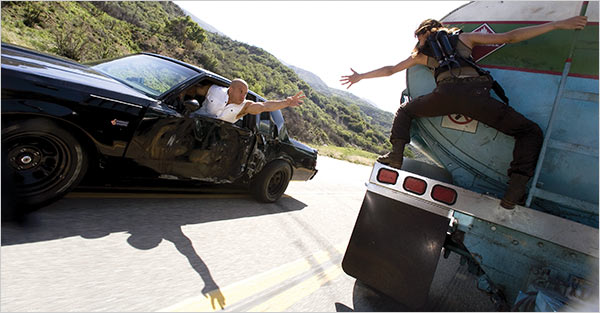
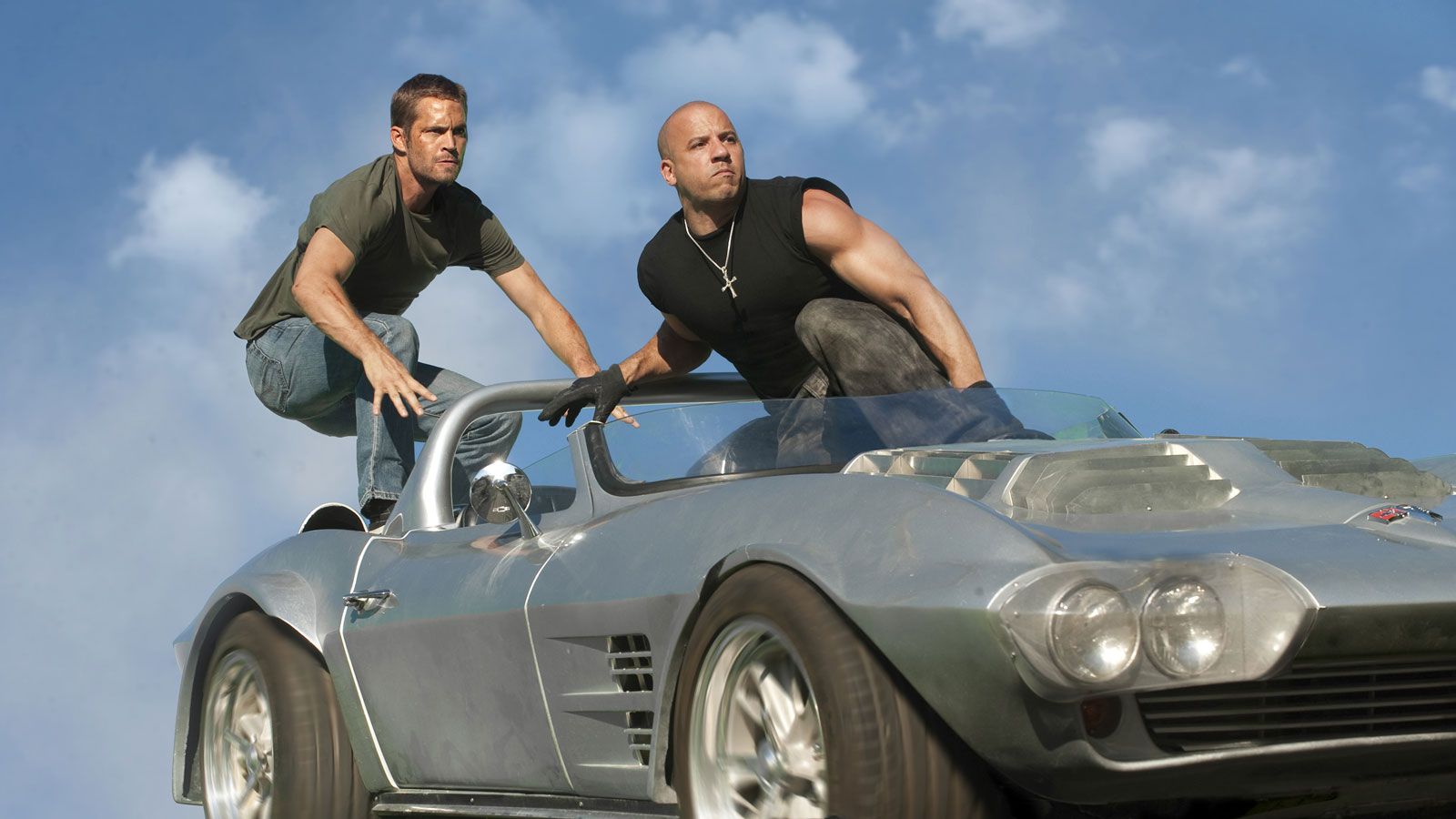
One of the most anticipated films of the summer, Fast & Furious 6 dropped on Memorial Day weekend with its multi-cultural star power, its high speed car chases, massive explosions, and one well-documented tank. Dom Torretto (Vin Diesel) finds himself living the life without fear of extradition, while Brian O’Conner (Paul Walker) and Mia Torretto (Jordana Brewster) welcome their first child; Roman (Tyrese Gibson) and Tej (Chris “Ludacris” Bridges) are jet-setting in style. But when Diplomatic Security Service Agent Hobbs (Dwayne Johnson) arrives with a picture of the thought-to-be-deceased Letty (Michelle Rodriguez), Torretto’s old flame, the Torretto gang is back in action.

Taking on Owen Shaw (Luke Evans) and his crack team of drivers, our crew finds that the stakes are much higher. Shaw is stealing the pieces necessary for a massive “blackout” instrument, and Letty has joined his crew. Honestly, to provide the back story in a quick review would be pointless, but this one is the first movie to really pull on the stories we saw in 2 Fast 2 FuriousTokyo Drift (as a precursor), and Fast Five. We see the family that Torretto has fought so hard to protect having to unite to find out the truth about one of their own, battling (for once) against a common enemy, rather than bickering with each other.

The film itself has some significant visual pizzazz. The car chases are what you would expect from a Justin Lin flick, but the degree to which they’ve been ratcheted up (aforementioned tank, exploding cargo plane, ramp cars) is significant. But this film is almost more about personal, hand-to-hand combat than car battles. Gina Carano and Michelle Rodriguez mix it up (that’s an understatement) while Torretto and Hobbs fight Kim Kold as Klaus, and Roman keeps ending up at the wrong end of The Raid: Redemption’s Joe Taslim. It’s fast… and furious battling.

But the main villain, Shaw, is pretty forgettable, even if his toys have some serious power, like the race car with a ramp on it, the smart “bullets” that can immobilize a car. Still, Shaw’s team seems to stay one step ahead every time, citing “precision” as his claim to fame, and stating that his team isn’t important individually but that their skills are clearly replaceable. This is the unifying theme of the movie: it’s the chronicle of Torretto’s “family above all” versus the pitch black of Shaw’s man apart, man alone. We have to consider for ourselves: do we live as complementary souls in a community or simply as “users,” who take what we want from life and relationships without regard to what that costs someone else?

As I said in my recap of the first five films, family is what it’s all about here. It’s not the family of origin but the family that stands by you in your darkest hour. Whether it’s Torretto’s unwillingness to let Letty go, Torretto recognizing that O’Conner loves his sister and must learn to accept him, or one character’s life-giving sacrifice for the other, we have family in full focus here, offering forgiveness, grace, comfort, and “back up” in every situation.

And most of all, this is FUN.

P.S. And just as an added bonus: when Torretto asks Letty if any of “this” (her former friends gathered around table together, moments before Roman will say grace) is familiar, she says, “no, but it feels like home.” To me, in a nutshell, that’s what heaven is– forgiveness has come, real unity and peace have been made known, and we are at a place of fellowship where we’re accepted for who we are in peace and joy. Obviously, Jesus isn’t THERE in the film, but when grace is invoked, the Holy Spirit is, right?

Posted in Movie Reviews, Pop Culture, Theology | Tagged , , , , , , , , , , , , | Leave a comment

Fast & Furious: The Saga So Far

In 2001, Universal Pictures delivered the car-racing, screen-stealing action flick The Fast and the Furious, intent on launching the career of the pretty boy Paul Walker and continuing the upward trend of the gravelly-voiced hulk Vin Diesel. After a strange step away by Vin Diesel in the out-of-sequence sophomore outing and the out-of-sequence Tokyo Drift, Diesel returned in the third and hasn’t looked back since. And now, we’re just days away from a sixth adrenaline-infused outing that looks to defy anything you’ve expected from it before, while banking on the multi-ethnic, comic, dramatically thrilling stunt show that anchors in the real-life action rather than in CGI “cheating.” So, how’d we get here?

fast andthfuriousIn the original, Walker’s Brian O’Conner goes undercover with the gang of Dom Torretto (Diesel), who oversees a crew of illegal street racers who moonlight as semi hijackers. O’Conner falls hard for Torretto’s sister, Mia (Jordana Brewster), under the watchful eye of Torretto’s girlfriend, Letty (Michelle Rodriguez), Torretto’s “little brother, Jesse (Chad Lindberg), and Mia’s ex-boyfriend, Vince (Matt Schultze). But O’Conner’s bosses turn up the heat on the investigation after he points the finger at the wrong racer, Jonny Tran (Rick Yune), and the net closes in on Torretto’s crew. A shoot-out, a car/bike chase, and a speeding train all lend themselves to ten minutes of action that best be seen, not read about. Overall, this one is a 9 out of 10 for action and pithy quotes like Torretto’s life mantra: “I live my life a quarter-mile at a time.”

2fast2furiousThe opening of the sophomore follow-up from 2003, 2Fast2Furious, throws a barrage of actors who are now hot names, like Michael Ealy, Ludacris, Amaury Nolasco, and later, the rapper-turned-movie star Tyrese Gibson. Here, the fugitive O’Conner is responsible for infiltrating an Argentinian drug lord named Verrone (Cole Hauser) with his ex-con buddy Roman (Gibson), as they follow the path blazed by Customs Agent Monica Fuentes (Eva Mendes).   The set-up from the first one has been established as a trend: we’re watching a thrilling car-driven (no pun intended) actioner that mixes race, gender, and style as long as the people are pretty and the chemistry works. But they’ve stepped up the conflict from local and gang-related; now, it’s taking on the mob, and the Diesel element is no longer present. Gibson is no Diesel, but he holds his own (and looks more comfortable than he does running around against a CGI screen in the Transformers series). Verrone is a bad man, as proofed by his rat scene with Mark Boone Jr. (Sons of Anarchy) but this one has its fair share of humor, too (ejector seats, anyone?) The window is bigger but the outcome remains the same: it’s all about the race for freedom!

The Fast & the Furious: Tokyo Drift (2006) appears out of sequence, as it’s supposed to happen after all of the others. It was received poorly at the box office and critically, without the star power of Diesel, Walker, or… anyone else. But it did bring in director Justin Lin, who has booted the series back into stunt driving heaven. ‘Nuff said.

rsz_fast_and_furious26Fast & Furious (2009) finds Torretto and his crew hijanking tanker trucks in the Dominican Republic but when they encounter too much trouble, Torretto breaks up the queue. Letty is gunned down by a drug-running street racing crew that O’Conner is also investigating, and suddenly Torretto and O’Conner are back at odds and working against the same common enemy, Arturo Braga (John Ortiz). While this one has more of the sense that the original did, with more racing and less blah-blah-blah, it’s just a subpar movie compared to some of the others. Sure, we can appreciate the opening scene and the final race through the tunnels, but in between, this feels like any other heist movie, and not a particularly good one. But Walker and Vin Diesel are back in the center of the screen, and that makes for better stuff all around.

Fast-Five-FilmFast Five (2011) is quite possibly the best of the lot, yes, even better than the first. After O’Conner and Mia land in Rio de Janeiro, they join up with Vince (who has been hiding out there since the end of the first film) and Torretto to steal some cars. But the car they steal rides in the drug war between drug lord Herman Reyes (Joaquin de Almeida) and Diplomatic Secret Service agent Luke Hobbs (Dwayne Johnson). Which sets up a wonderful beefy meathead versus beefy meathead battle royale between Diesel and the Rock. Let’s see what Lin has cookin’!

The skydiving stunt at the beginning has awesome written all over it. But it’s the first in a long sequence of spectacular stunts as Lin’s crew ramps up the non-CGI action here. The crew goes after the drug kingpin’s money, and that truly ramps up the rest of the film. It has an Ocean’s Eleven-meets-The Italian Job feel to it, given that the crew continues to blossom, the violence is cartoonish (most of the time), and the humor is fast and loose in physical humor and one-line barbs exclaimed between characters. But it also throws out conversations between Torretto and O’Conner about fatherhood (yep, Mia is preggers), showing that it’s family-related AND that even in this fast-and-loose series, that they know some growing up is necessary.

Fast & Furious 6 (2013) shows that Lin, Diesel, et al. have a sense of humor. How else could you appreciate a film that includes a battle with a tank or a car chase-flying-from-an-exploding-plane as we’ve seen in the trailer? And how about the return of Letty, as both a ploy and a major question for Torretto? What will “family” look like when Rodriguez and Haywire’s Gina Carano are done beating the heck out of each other? I’m betting on seamless energy, amazing stunts, and double-doses of humor and entertainment.

Where else can you see a multiethnic battle of wills, where race and financial status aren’t what determines who is good and who is evil? Where else can you see men and women fighting for family (and not just sex) to make their way in the world and establish their identities? I’m not saying its great theater or that the films would be half what they are if you sucked out the great stunts, driving, and base backbeats, but please, did you see this one turning into a trivia question about movies that have delivered more than three films successfully at the box office?

Torretto is the godfather of a crime family you find yourself cheering for. Death before dishonor might be what they claim for themselves, but it’s more along the lines of family before isolation or community over individualism. It’s a strange blend because the racers themselves are vying for position, to be the best, the fastest, the boldest, but they constantly attribute their strength to what they hold in common: their value of loyalty above all.

We’ll see what Friday adds to the mix but for now, you have time to kick back and catch a few thrilling chases, a couple of life-defining lines, and a sense of adventure that’s contagious.

Posted in Movie Reviews, Pop Culture | Tagged , , , , , , , , , , , , | 2 Comments

Parker: Robin Hood-Meets-Angel of Vengeance

Jason Statham is one of those guys whose movies I want to like. Like Mark Wahlberg or The Rock, I find myself enjoying some of their movies and then recognizing that a few others aren’t nearly as good (past winner for this award: Adam Sandler). But Statham sort of maxed out with The Transporter series, and it’s been relatively downhill since. But then Parker arrived.

Parker is adaptation of the nineteenth novel by Donald Westlake as Richard Stark about a professional thief (he has also appeared with a different name, see Payback with Mel Gibson). Here, Parker is double-crossed by Melander (Michael Chiklis), who has him shot and left for dead. Rising up from his near death experience with vengeance on his mind, Parker makes moves to protect his girlfriend (Emma Booth) and track Melander’s gang to Palm Beach, Florida, where he intends to thwart their current robbery scheme, take back his own share of the previous job’s money, and end their careers. But they know he’s coming for them, and significant forces are put up in his way.

But Statham’s Parker has J-Lo’s Leslie Rodgers, small-time real estate agent, on his side. Wanting to break free of her own miserable life, she throws her lot in with him, providing him with a sidekick he doesn’t really want, and comic relief throughout the reasonably tense thriller. Don’t be fooled though: this is one of those rare Statham movies that stays locked in on where it’s going and what it’s doing so that nothing can dilute the intensity or cause us to stray from the Statham-as-skilled-fighter that we loved early on.

Parker is a skilled thief, fighter, and confidence man, but his life of crime hasn’t completely frozen over his soul (think thief with a heart of gold). He rescues a security guard from being gunned down by carefully calming the man down; he refuses to kill those he considers innocent. In fact, Parker sees himself as kind of a Robin Hood type, only stealing from those who have more than they need, and keeping a particular blend of morality that involves keeping his word and setting things straight when others act “dishonorably.”

It’s definitely one of my favorite Statham movies, but it’s high on bloodshed and low on depth. It’s entertaining in a vendetta sort of way, like RoninThe Count of Monte Cristo, etc. but doesn’t really give us anything in a meaningful way, besides reminding us, “never mess with Parker.”

Posted in Movie Reviews, Pop Culture | Tagged , , , , , , , , | Leave a comment

Dan Brown’s Inferno: Robert Langford In Dante’s Hell

The fourth installment of Dan Brown’s books to feature Harvard’s adventurous art history prof, Robert Langford, finds the hero of Angels & DemonsThe Davinci Code, and The Lost Symbol suffering from amnesia and unaware why he’s in Florence, the victim of an attack. Soon, he’s racing through Europe with Dr. Sienna Brooks, trying to decipher the reasons behind the version of Boticelli’s “Map of Hell” contained within a hi-tech cylinder hidden in his sport coat. Soon, the two thrown-together explorers find themselves ducking the military, shadowy operatives, and exploring the historical elements connected to Dante Alighieri’s Inferno.

So, how does this fit into the pattern of Brown novels? Does it meet the prerequisite pattern? In the past, Brown has tackled major religious system theology (Jesus was married?) or subgroups (the Masons are bad!) He’s thrown Langford through a pattern of history-laden puzzles like Nicholas Cage in National Treasure. And he’s created a complete conspiracy with greater implications which only Langford is clever enough to unravel. And Brown usually reveals that someone close to the case, and in Langford’s inner circle, is bad news. Given the pattern, it’s clear that Brown’s patterns continue (for the most part).

This particular novel has a wider scope than its predecessors but it’s also more technical and less smooth. Several times in the afternoon (yes, I read it in nearly one sitting), I found myself stalled by plot points or clues that I found blatantly obvious. But more troubling was the way in which Brown fell into attempting to impress us with his knowledge of art and the transhumanism movement in Brown-like fashion. While the plot has a very James Bond-like villain, and a certain amount of thrilling scenes, Brown has somehow taken the excitement out of the tale, where his other stories were much more gripping.

Transhumanism’s desire to control the global population (which may or may not be one of its goals, but hey, Brown already irritated some Christians and some Masons, so why not?) raises some interesting questions about how we steward the world we’ve been giving. Is overpopulation a problem? Or is the lack of global sharing of necessary goods a bigger deal? Controlling the population seems Hitlerish rather than humanitarian, but as Brown explains it, it’s more about the long run view for the world than it is about humans in the here or now. Was that confusing? Because then Inferno probably isn’t for you, because you “ain’t seen nothing yet!”

One sentence review: Go read Angels & Demons or The Davinci Code because they’re significantly better. 

Posted in Books, Pop Culture | Tagged , , , , , , , | Leave a comment

Star Trek Into Darkness: Old School Space

First off, a disclaimer: I’m a Star Wars guy, not a Trekkie, but I’ve seen all of the original cast Star Trek movies several times, and I have a lot of respect for the … even-numbered ones. But I thought J.J. Abrams’ first “remake” of the Trek franchise was phenomenal, a wild ride that saw Captain Kirk and company wrestle with Romulans, time travel, and rebuilding a franchise that had languished. Bring back the cast from that first outing, and throw in Benedict Cumberbatch as a villain, and I’m down.

The sophomore update provides just as much flair for the dramatic as the first, beginning with another “chase,” as Kirk (Chris Pine) and McCoy (Karl Urban) avoid capture by primitive natives with a deep sea plunge. But soon we’re dealing with more than Kirk’s foolhardy recklessness: he breaks the Prime Directive (basically, “do not interfere”) by saving Spock (Zachary Quinto) from dying in a volcanic explosion. Spock doesn’t understand why Kirk would save him and break the rules, and we’re dealing with their tension through the explosive finale of the film. The stage has been set for rules, community, and friendship to be picked apart onscreen.

Without much down time, the film flips to the terroristic attack of “John Harrison,” who will take down Starfleet’s command, and lead the crew of the U.S.S. Enterprise on a Zero Dark Thirty-in-space mission. Things get complicated when Kirk refuses to kill Harrison once he’s captured, and Starfleet Admiral Marcus (Peter Weller of Robocop) arrives on the scene with authority to kill everyone in his way. If you haven’t seen the movie, and don’t want it spoiled, stop reading!!

The movie is definitely more of a popcorn feel than the introspective take of Iron Man 3. This was clearly a “popcorn flick” for me, with flashes of nostalgia for the old school Trekkie: Tribbles, the reversal of fortunes from Wrath of Khan/Search for Spock, Alice Eve as Dr. Carol Marcus. The action is intense, and over-the-top (the deep space Tron ride of Harrison and Kirk?) effects are amazing. I’m definitely a fan of the Spock versus Harrison/Khan battle, and the humor flashes back to a time when movies could be fun and not as dark.

But this is dark. Khan is TICKED and his level of vengeance reflects Ricardo Montalban’s violence in the “original.” His takedown of Marcus is sickening, even though we see it coming. Spock’s rage (Vulcan-side, what??) is intense, personal, and credible. (A friend of mine who isn’t up-to-speed on the old movies, later said, “I couldn’t believe they would kill him off! Didn’t they want to make more of these?”) We feel like there’s a chance (however small) that this could “off” a major character, and we’d see Abrams re-work the ongoing mythology.

Where does this leave us? If we’re willing to pull back the shade and compare to our own lives, it seems to ask two questions. One, how beholden are we to the rules? Are we so inclined to follow the information we’ve been provided even if it means sacrificing someone or something we love? Two, how do we define friendship and how far are we willing to go for that friendship? Jesus said that a person couldn’t show any greater love than laying his/her life down for their friend(s) (John 15:13). And then he went out and died for his friends (and everyone else). But both Kirk and Spock share dialogue and life experience, trying to sort out the two questions. What’s worth dying for? What’s worth living for? And who determines that for us?

Looks like the Enterprise has another five-year mission to figure out the answers.

Posted in Movie Reviews, Pop Culture | Tagged , , , , , , , , , , , , , , , | Leave a comment