Sunday’s Sermon Today: Social Principles- The Christmas Jar

I’ll admit it. I love books. I enjoy diving into a world I’ve never experienced before, learning about a place or a person I would never meet otherwise. I’ll read a few books a week during the year, even twice as many in the summer or on vacation. But periodically, I’ll come across a book and be transformed.

The week of Thanksgiving 2009, my mother-in-law gave me her copy of Jason Wright’s The Christmas Jars to read. I’ll admit that I was skeptical at first, because her book group was reading it –  and I’d ignored the previous year’s worth of selections. But something about the way she spoke about the book made me open to the first page, and a few hours later, I’d finished a book that is one of just a few books I’d say changed my life.

In the original story, written by the Shenandoah native in 2005, a poor, young family collects money in a jar all year for its gift giving to each other. On the night they decide to go Christmas shopping, their young daughter sees a woman sitting alone and heartbroken on a bench. She reacts immediately out of kindness and mercy to give the woman their Christmas jar. The family has no money for gifts that year, but the impact of her decision reverberates for decades. A tradition of giving a jar of coins and cash to people, secretly, without receiving credit is born in the little town. While the gift is financial, the amount is never too much – it fits in  jar – but the impact of the jars on the life of each character is exponential.

The giver and the receiver in each ‘transaction’ recognizes that there is something in giving, in passing it on, in paying it forward. Each person recognizes the beauty and truth of Micah 6:8:

He has shown you, O mortal, what is good.
And what does the Lord require of you?
To act justly and to love mercy
and to walk humbly with your God.

Justice. Mercy. Humility. Earmarks of the disciple, right? Earmarks of what we are called to be when Jesus calls us out of the lives we live without him into the life of the kingdom of God.

Here, on this Sunday before Thanksgiving, I am left wondering what it would look like if we embraced that holy triumvirate of virtues, if we sought to live out our lives with the life of love and grace that the prophet Micah spoke of.

But how can we? What qualifications or marks might we look to when determining how to direct our work, our home lives, our church, our community? Consider these words contained in the United Methodist Church’s Book of Discipline.

The Social Creed of the United Methodist Church

We believe in God, Creator of the world; and in Jesus Christ, the Redeemer of creation. We believe in the Holy Spirit, through whom we acknowledge God’s gifts, and we repent of our sin in misusing these gifts to idolatrous ends.

We affirm the natural world as God’s handiwork and dedicate ourselves to its preservation, enhancement, and faithful use by humankind.

We joyfully receive for ourselves and others the blessings of community, sexuality, marriage, and the family.

We commit ourselves to the rights of men, women, children, youth, young adults, the aging, and people with disabilities; to improvement of the quality of life; and to the rights and dignity of all persons.

We believe in the right and duty of persons to work for the glory of God and the good of themselves and others and in the protection of their welfare in so doing; in the rights to property as a trust from God, collective bargaining, and responsible consumption; and in the elimination of economic and social distress.

We dedicate ourselves to peace throughout the world, to the rule of justice and law among nations, and to individual freedom for all people of the world.

We believe in the present and final triumph of God’s Word in human affairs and gladly accept our commission to manifest the life of the gospel in the world. Amen.

Are we the living embodiment of these things? Are we pursuing the kingdom of God in a holy way? I must admit that some days I don’t know how to start.

I wonder if serving in the community, whether it be coaching a little league team or volunteering at a school makes a difference.

I wonder if giving financial help to one person makes a difference in the life of the community.

I wonder if one word spoken can make a difference in the day of a person or group.

I wonder if taking a stand on an issue in one corner of the world can make a difference in another.

And then I remember the Christmas Jars, how one book challenged me and changed our church.

See, the Sunday after I read Jason’s book, I preached on it. I talked about what it would look like if we stopped seeing missions as a way to give money away over there to people we didn’t know, to people we didn’t have to interact with, to people we didn’t have to be empathetic to, only compassionate for.

I talked about what it would take for us to do good even if we couldn’t get credit for it because Christmas Jars are supposed to be anonymous. Christmas Jars were an abundant outpouring, a connection with someone else, that we wouldn’t ever get the satisfaction of their thanks.

Christmas Jars were about our Thanksgiving, not the recipient’s.

And then, that Sunday, I shared about some real-life Christmas jars, because Jason’s story isn’t just a story, it’s a movement. Jason’s website, www.christmasjars.com, has story after story about people who received jars, and people who gave them. It has stories of people who were going to commit suicide the day they received a jar, and of people who thought they had lost everyone and everything before receiving a jar and realized they were not alone.

Stories like these:

I was diagnosed w/a brain condition called Cadisal in 2010. It is a really rare neurological disorder that can cause loss of some functions in a persons body and/or memory loss, both long and short term. It is a calsification of brain matter and most people are born w/it and are diagnosed until they are about 50. Many of the symptoms are just assumed to be normal physical manifistations everyone goes thru as we grow up/age. Until one is diagnosed you have no clue these things are actual symptoms of a disorder!!

Anyway, because of this I had occasional auras and seizures as well. Finally, in November 2015 I had a grand mall seizure and hit the basement floor, causing a concussion and a broken left arm. That put me out of commission. My friends and family all over here and across the country sent me cards and letters, as well as in this case a copy of the book and a jar filled w/coins.

One day we found several boxes of groceries that had been left by someone in our garage w/o a note or any way of knowing who to thank for such a generous gift. W/i the next week a ziplock baggie was found on our back porch with a Christmas card, unsigned; a copy of the book by Jason Wright and a jar filled w/coins. We opened this jar and dumped it into a bowl, with the coins were two little balls of green paper. We unfolded the balls and they turned out to be $100 bills!!!! Yep, two $100 bills. Again, no signature on the book, card or in the baggie to let us know who did such a generous thing for us and just after I had the seizure and got my las paycheck from my demo job at Walmart. This was like winning the lotto to us. WOW.

Or from Purcellville, Virginia:

I received a jar this Christmas while I was at physical therapy for my daughter. She’s eleven with cerebral palsy and epilepsy, to name a few. I also have an eight-year-old son. Their father has passed on so I’m a single parent. This jar has changed my life. I too said that surely there had to be a more needy person than myself! The message behind it has moved me deeply. They gave it to her therapist to give me. Whoever my angel is, we thank you and God bless.

There are hundreds of stories like these, spread around the country. But I know from firsthand experience – from giving and receiving Christmas Jars – that the jars will change you.

See, within a week of that first sermon, I had ordered dozens of copies of the book for people who wanted to read it. Within the first month, there were jars flying around the church, to those in need throughout the community. People were making change just to fill jars!

By the end of the first year, the church’s mission had grown, to include annual Christmas jars, to include Christmas and Thanksgiving baskets for the country, to include an ongoing benevolence fund for those who visited the church in need.

All because of one little book. All because of one fictional little girl who was thankful for what she had. All because of one man’s faithful imagination. All because of one Christmas jar.

Today, I invite you to start filling a jar, to begin finding a tangible way to express your thanksgiving for what God has given you abundantly. And I encourage you to start praying for the person in your life who you’re supposed to bless.

Each coin, each prayer, will change you.

It’s the thought that counts, put into action, that can change your world.

Happy Thanksgiving!

Amen.

Posted in Sermons, Theology | Leave a comment

Sunday’s Sermon Today – More Than Stories: Eating Well, Living Right (Daniel)

Most of us have gone through a phase where we wanted to lose weight. We’ve tried plenty of methods, working out, not eating after a certain time, getting a better night’s sleep, several little meals versus breakfast/lunch/dinner, whatever the latest fad is, right? But ultimately, it doesn’t matter how much we change everything about our lives, if we don’t alter what we eat, as one of my informal Facebook surveys proved.

When asked for weight loss tips, several of my friends focused in on the number of grams of sugar they consumed per day.

Some held onto the tried and true exercise programs, or Weight Watchers, or a glass of water before every meal.

The ingesting or the intake was the thing!

What we eat impacts our ability to lose weight. We can change all the other variables, and if we don’t change what we consume, it really doesn’t matter. It’s a lesson many of us have learned by looking down at our guts and our growing clothes sizes, but it’s one that Daniel understood as a young man, imprisoned in Babylon.

Now, maybe Daniel was smarter than many adults, or maybe his perspective on the world was sharpened by his being kidnapped at such a young age, and being thrust into a strange culture. In Daniel 1, we know that he was dragged to Babylon by King Nebuchadnezzar’s righthand man, Ashpenaz, along with all of the young men who were deemed to be all of the young, male royalty, who were “without any physical defect, handsome, showing aptitude for every kind of learning, well informed, quick to understand, and qualified to serve in the king’s palace.”

King Nebuchadnezzar has snagged the best-of-the-best that Israel had to offer. The pretty kids, the skilled kids, the people that he could use because they were brimming with potential. And Ashpenaz was supposed to brainwash them, to lure them in with the finest foods and to teach them all about how to be a Babylonian. Nebuchadnezzar didn’t plan on just capturing other countries. He wanted to assimilate them, until no one could remember that they were anything other than Babylonian. Nebuchadnezzar was the biggest bully alive — he’d basically replaced that old enemy of the Israelites, the Philistines.

So, we’re told that Daniel, Hananiah, Mishael and Azariah were chosen, and renamed Belteshazzar, Shadrach, Meshach, and Abednego. Their assimilation, their discipleship, their removal of all things Jewish was intended to be thorough, complete, and final.

But in 1:8, it says that “Daniel resolved not to defile himself with the royal food and wine.” Daniel decided that he wouldn’t be bullied. He wouldn’t bend or break. He wouldn’t relinquish who he was.

This week, I had the opportunity to see Hacksaw Ridge about the U.S.’ assault on Okinawa during World War II. There are intense, bloody battle scenes that won’t be for everyone. But this is just the backdrop for the real story of the film: the life and faith of Desmond Doss. Doss is a Seventh Day Adventist, who believes that God doesn’t ever want him to kill. But he’s patriotic, so he signs up for the Army as a medic.

And the worst treatment he gets in the whole film comes at the hands of his comrades, who don’t understand his faith, who think his unwillingness to handle a gun makes him a coward. I won’t spoil the film for you with too many more details, but let’s just say they don’t make movies about people who don’t prove unique. Doss stands for his beliefs and that changes everything.

How often does it come down to one person? One person who is willing to make a tough call, to follow what he or she knows to be true, to be bold and courageous in the midst of a sea of adversity like Abraham or Joshua. One person to say yes to God like Mary. and he asked the chief official for permission not to defile himself this way.

It says that God honored Daniel’s faith and softened the heart of his jailer, Ashpenaz, but Ashpenaz still had to deal with his own pain and fear. The Babylonian heard something in Daniel’s plea that made sense, that defied the ways that he’d been expected to act. But he was still afraid.

So Daniel, a teenager remember, but maybe it has to be a teenager, someone brave and willing to play fast and loose with the rules, even in captivity, says, “give us ten days to try it our way.” He proposes a ten-day experiment, the compare and contrast, the my way versus your way test.

And at the end of ten days, Daniel’s crew of Four Musketeers was healthier and stronger than those who ate the rich food of the palace. And the outcome was so stark, so obvious, that Ashpenaz took away all of the rich food of the king and substituted it with the vegetables that Daniel had proposed.

Were the four men sent back to their homes? No. Were they freed from slavery? No. Were their instant troubles alleviated? No.

Their obedience was rewarded though. “To these four young men God gave knowledge and understanding of all kinds of literature and learning,” and their responsibility, their stature, rose. They had stood together against something they knew wasn’t right, and they had survived. They had rejected the fat, the poison, the dilution of their physical selves because it would dishonor their beliefs, and God had rewarded that.

Sounds like a perfect segue to “our bodies are a temple of the Holy Spirit,” right? I could promote Jenny Craig For Jesus or Weight Watchers and Ye Holy Ones or South Beach of Galilee Diet. But instead, I think it’s fascinating to focus in one aspect of this, and shocking enough, it’s not the food.

Daniel rejects the idea of taking in anything that would weaken his spiritual being.

The food is just the physical thing we recognize, but Daniel is rejecting being assimilated into something less than who God wants him to be. The new name, the new language, the new beliefs, the new everything.

Daniel knows who God is and he rests in that. He’ll pass on the extra servings of everything else. He’s turning all of the bad stuff aside… “thanks but no thanks on the wine.”

And I wonder how much of the seemingly insignificant things we “allow” for are the beginning of the slippery slope. Where do you or I draw the line on staying true to following Jesus?

For Daniel, nothing is insignificant.

See, after the food challenge – Daniel ends up with a prayer test.


God isn’t done with Daniel yet. In Daniel 6, Daniel is thrown into the den of lions most famously because he refuses to not pray. In Daniel 6:6-23, we find Daniel, the advisor to the king, knee-deep in a conspiracy of the high court. See, several of the king’s other advisors must’ve felt threatened by Daniel’s relationship to the king, so they went to the king (never too bright a bulb as we’ve seen already in his handling of nutrition and the thousand-foot statue of himself) and proposed that the king issue a law that said the king was the only person who could be prayed to for a month.

And the king, proud, powerful, and vain, thought this was a great idea, and signed on the dotted line. Condemning his best man to death with a stroke of the pen.

How often do you think you’re forced to choose between what you’re told to do by your boss, by the government, by your spouse, by your parent, and what you think that you’re supposed to do based on what the Bible has to say?

Once a day? A week? A month?

What pressure do you face? Is it the loss of a job, or a friendship, or status? How do you decide what’s “right” for that instance? We’d all like to say that we always do the right thing… but we don’t. And frankly, neither did the people in the Bible. Peter got it wrong several times; so did Abraham, David, and Adam… but we still remember them well. It’s not always getting it right or wrong though that matters in the Bible– it’s usually most important how God shows up.

When I find out that there’s a law or a rule in place that seems to penalize me, I usually pout for awhile. Sometimes, I’ll even eat some candy and watch television. But I rarely flaunt the breaking of that law immediately, and I’ll admit it, I don’t pray about it as often as I should.

Daniel, he’s iconoclastic and faithful. It doesn’t just say that these out-for-blood rivals found Daniel praying; it says that when Daniel heard the law was in place, he went to his room, through open the windows and prayed to God at the three times appointed for prayer. He didn’t change his pattern, he didn’t hide what he was doing. He went to God about the problem in prayer.

Daniel went directly from hearing the bad, life-condemning news to prayer. Dir-ect-ly.

Now, how seriously do you take prayer?

Of course, his rivals saw the prayers, and went running to the king to tattle like little kids who’ve caught their classmate in mischief. “Oh, King Dariiiiiiius! Remember your law about praying? Well, Daniel is breaking it!” Instantaneously, you can see the color drain from the king’s face as he realizes what he’s done, and he thinks all day on how to get Daniel out of trouble.

Still, there was no rescue for Daniel. The king’s law was more powerful than the king himself. The law was too dangerous, and the king couldn’t undo it. So Daniel gets thrown into the lion’s den with the king’s blessing, “May your God, whom you serve continually, rescue you!”

Daniel was thrown in, rare meat and blood still bumping, and a stone placed over the mouth of the den. And the king went back to the palace to contemplate the funeral of his friend and advisor, while Daniel… slept?

It says that at daybreak, at dawn’s first light, the king ran to the lions’ den and cried out before he even got there, “has your God actually been able to rescue you from the lions?”

Daniel responded that there had been an angel there all night, that the angel of God had shut the mouths of the lions because Daniel was innocent in God’s sight. And Daniel pronounces himself innocent of offending the king, because his prayers to God were right and just. Not only was he alive but there were no wounds on him, because he had trusted in God.

Twice, Daniel was faced with a challenge: would his faith outweigh other authority, other choices, other temptations? And three times, Daniel passes the test, major tests, no less.

And I find myself wondering, do I even pass the quizzes? Do we even recognize the little moments when we have the chance to make the right decisions and honor God?

Do we curb our tongues in vocabulary, or in the way we speak about and to others?

Do we consider what we read about, watch on television and in the movies, listen to on the radio or on our iPods?

Do we reject the stories, jokes, gossip, or general meanness that circles around us at work or at home or with our friends?

Are we willing to take a stand on whatever front could be the most dangerous to us, and recognize that we are meant for something greater than this? That God doesn’t want our minds, our bodies, our souls defiled by the junk that the world tells us is okay? That God wants our undivided attention and love, that’s decluttered of junk, food or otherwise?

I once had a Godfearing friend of mine come and admit to me that somehow, what he heard on TV and talk radio had replaced the values he had learned in church. My friend told me that he’d stopped listening to the radio on his long work commutes altogether because he realized he spent more time listening to them than he did to the pastor of his church. He recognized that what he was internalizing wasn’t Biblical – so he put a stop to it.

What he was ‘ingesting’ through his ears was making him sick! He realized that there were other agendas he was hearing that weren’t from God – that weren’t about loving our neighbors, loving our enemies, as we’d love ourselves. My friend realized that problem – and he decided he was going to “eat” right and live well.

I pray that this week that you will have the faith of Daniel, to reject those “foods” the world tries to feed you, and stick to the diet of God’s truth, love, and grace. I’m betting it won’t take you a ten-day trial period to see the difference.

I pray this week that you will put the worship of God before any idol the world places in your path, whether it be material, monetary, or relational. I’m sure that God is the only thing worthy of our absolute adoration.

I pray this week that you will pray – without ceasing, regardless of how uncool or unremarkable praying is considered. I’m confidant that praying is significantly more powerful than not praying!

Friends, I hope this week, you are inspired by Daniel – a young man who lived boldly by just being who he was supposed to be. And that you’ll be inspired by Desmond Doss, who refused to stop praying, even when others found it ridiculous.

This week, I’m aiming to do just the same. Will you join me? Amen.

Posted in Sermons | Leave a comment

Sunday’s Sermon Today – More Than Stories: Saints in Different Shapes (I Kings 17:1-6)

Sometimes, the line between saint and sinner is razor thin. There’s the story of a minister who died and is waiting in line at the Pearly Gates. Ahead of him is a guy who`s dressed in sunglasses, a loud shirt, leather jacket, and jeans. Saint Peter addresses this guy, “Who are you, so that I may know whether or not to admit you to the Kingdom of Heaven?”

The guy replies, “I’m Joe Cohen, taxi-driver, of Noo Yawk City.” Saint Peter consults his list. He smiles and says to the taxi-driver, “Take this silken robe and golden staff and enter the Kingdom of Heaven.”

The taxi-driver goes into Heaven with his robe and staff, and it’s the minister’s turn. He stands erect and booms out, “I am Joseph Snow, pastor of Saint Mary`s for the last forty-three years.”

Saint Peter consults his list. He says to the minister, “Take this cotton robe and wooden staff and enter the Kingdom of Heaven.”

“Just a minute,” says the minister. “That man was a taxi-driver, and he gets a silken robe and golden staff. How can this be?” “Up here, we work by results,” says Saint Peter. “While you preached, people slept; while he drove, people prayed.”

Hilarious, right? Sometimes, sainthood is not quite as funny.

In her book, Accidental Saints, Nadia Bolz-Webber writes about discovering a woman named Alma White who planted the Pillar of Fire Church in 1901. So excited was Bolz-Webber that she Googled White, and discovered that she was the first female bishop in the U.S. in 1918, noted for her feminism and… her association with the KKK, her anti-Catholicism, anti-Semitism, anti-Pentecostalism, racism, and hostility. When she called a friend to tell her she’d found her newfound hero was a racist, her friend said she belonged in their All Saints Day celebration. Bolz-Webber didn’t want her there – she wanted her categories kept clean, not a situation where “saints were bad and sinners were good.”

Bolz-Webber writes, “Personally, I think knowing the difference between a racist and a saint is kind of important. But when Jesus again and again says things like the last shall be first, and the first will be last, and the poor are blessed, and the rich are cursed, and that prostitutes make great dinner guests, it makes me wonder if our need for pure black-and-white categories is not true religion but maybe actually a sin. Knowing what category to place hemlock in might help us know whether it’s safe to drink, but knowing what category to place ourselves and others in does not help us know God in the way that the church so often has tried to convince us it does.”

Ah, saints.

Let’s look into the life of the Catholic Church – maybe they can help us clear up this saint thing. They’ve been working on it for quite some time.

Seriously though, there’s actually a five-step process in the Catholic Church to canonize a saint. First, the local bishop investigates the person’s life, gathering witnesses and information about what they may have written. If their words are considered worthy, the information is submitted to the Vatican’s Congregation for the Causes of Saints. Second, the Congregation for the Causes of Saints can choose reject the application, accept, or investigate. Third, the Congregation approves the candidate as having lived a heroically virtuous life — not declaring them to be now in heaven, but that they pursued holiness on earth. Fourth, they determine whether or not the person took part in a healing which was instantaneous, permanent, and complete while also being scientifically unexplainable. If so, the person is declared a blessed. Fifth, to be a saint, the person must have completed a second miracle confirmed as the first.

Sounds intense, doesn’t it?

In the United Methodist Church, we call Matthew, Paul, John, Luke and other early followers of Jesus saints. And, as we do today, we recognize those people who have died before us, who are “all the saints who from their labors rest.” We remember those people of faith who lived faithfully and shared their faith.

These people did what they were called to do – sometimes boldly and sometimes simply – but they were where they needed to be and did what they needed to do.

Sainthood – it’s … complicated.

Do you know what you’re called to do? Better yet, do you know what you’re called to be?

I love the World War II drama, Fury, with Brad Pitt and Shia LaBoeuf. It focused on one team of soldiers who fought from inside of a tank against the Nazis in Europe, specifically Germany. None of the men in the tank are quite as religious as LaBoeuf’s character, called “Bible,” but they all seem to understand what he believes in. He thinks, win or lose, live or die, that God put him in a position to do something about the evil of the Nazis by fighting against them. It’s not metaphorical or haphazard: Bible literally knows he’s supposed to be where he is because he’s convinced God would want him to stop the evil Hitler was doing.

Bible has a clear sense of his calling; some of us don’t. But the Scriptures are full of people who either denied their call or who recognized a change in their call and responded to the urging of God. [To be clear, not all of them responded obediently: check out Jonah for instance, or consider the way that Cain responds to God’s call on his life!] My profession has a strong pattern of men and women who ‘put off their call’ until they were older, and switched from some career or calling to the pastorate later in life.

What if we could learn from the Bible what we were supposed to be and how we could look for those patterns in our own lives?

Let’s dive into the story of Samuel. Now, Samuel is one of the Bible’s miracle babies: he’s specifically prayed for by his mother Hannah, who mourns because she is infertile. When she discovers that she’s pregnant, she calls her unborn baby Samuel, “because I asked God for him.” When he is old enough, she gives him to the priest Eli to raise in the temple as one of God’s priests.

The first sign of calling: recognizing that we are God’s to begin with and our lives find their purpose when we acknowledge God.

Do you acknowledge God? Do you recognize that your life, the air you breathe, is God’s? Do you recognize that your money, the work you’ve accomplished and the stuff you’ve acquired, is God’s? Do you recognize that everything you have, and everything you are capable of becoming, is because God knit you together before you were born?

God breathed Spirit- air – life into Adam’s lungs in Genesis, and it made him come alive; God continues to breathe life into you and me, and it’s what makes us alive, makes us human.

The first sign of calling is recognizing whose we are.

So Samuel is raised up by Eli in the temple. Eli teaches Samuel the Scripture, and what it means to be a priest. I’m sure he put Samuel to work with the menial things, like sweeping out the temple, and counting the offering left by those who came to worship outside. As Samuel grew older, and accepted more responsibility, Eli gave him more to do, more practical ways to act out being the priest of God.

The second sign or mark of calling: recognizing the need to learn more about God and seeking out opportunities to study, pray, and grow.

Are you learning, or are you going through the motions? Do you recognize a need to know more about God, about the Bible, about the tools you need to practice prayer, and other marks of being a disciple? Are you recognizing that call to be a disciple, the marks of which many of you have taken on when you promised to be faithful by your prayers, your presence, your gifts, your service, and your witness, in joining the church? What are you doing to gradually grow in those things, whether it’s being more intentional about coming to worship on Sundays or setting the alarm an hour earlier so that you can make it to Sunday School or increasing your tithe, what you give back to God, by a percent or two each month?

At one of my previous churches, there was a woman named Kathy. Every Sunday morning, she had a deal with the children in her neighborhood. If they met her at the community playground by 9:30 a.m., she’d give them a ride to Sunday School, church, and usually, lunch!

Kathy is a saint. And she’s constantly working other people to sainthood, too, driving kids, rounding them up, and getting them to church. The thing is: these kids wanted to be there. There’s something they knew was different about being there, and they recognized it.

Now, imagine what it would look like if we could get all the adults we knew to recognize that need…

The second sign of calling is to recognize the need to grow.

Now, Eli is raising Samuel as a son, as a priest, in the temple, even while Eli’s sons are falling away from what God has called them to. Samuel is growing in “favor with God and all the people”- people are noticing that he’s good at being a priest- even while the people are stirring against the sons of Eli. They are abusing their power as priests by taking what they wanted, in terms of offerings brought by people to pray and by manipulating the women outside the temple. God was not pleased, and he prophesied against Eli’s house that he would be calling up a priest from outside of Eli’s house. God’s people needed priests but the priests weren’t getting it done; someone had to rise up to be the voice of the people to God and the voice of God to the people.

The third sign of calling is recognizing the need for what you bring, what gifts and graces God has given you in your personality, skill set, interests, and experience.

I read a story a few weeks ago about a young man named Carson Jones. He was a senior and starting quarterback in his high school. And one day, the mother of a special needs child came to him and asked him if he could figure out who was bullying her daughter at school. Easy enough, right?

Jones could’ve gotten some of his buddies together and ‘taken care of’ the problem. But instead, he changed things subtly. He brought his new friend with him to the football lunch table; he saw that someone walked her to class. Pretty soon, other people weren’t bullying her- they were looking for ways to help her out, too. Jones knew who he was and what he could do, and he did it- and it changed everything. [From Rick Reilly’s “Special Team” as republished in Tiger, Meet My Sister.]

Sometimes, it’s as simple as being there.

Have you ever thought about what gifts you have that you could bless others with, in and outside of church? Have you ever prayed about how you could get more involved with church? Sometimes, it’s the preacher who points it out to you- sometimes it’s someone else in church. But what would it look like if you actively stepped up to get involved, whether it was helping in children’s ministry, helping paint a room or two, serving food at a mission project or fundraiser? There are spiritual gift inventories you can take if you haven’t done one before – see me afterward if you want a copy to explore!

The third sign is self-examination of your gifts and situation to see what you can bring.

Back to Samuel: It says that “in those days the word of the Lord was rare; there were not many visions” (I Samuel 3:1). Is that any different from our days? Do we really think God is heard more frequently now, that the world is moving toward “your kingdom come?” But we know that we have a lot to turn off, from the television to our wifi feeds, if we expect to be able to hear from God.

Our boy-turned-priest is listening. Samuel hears God call him three times, and he thinks that Eli is calling out to him in the middle of the night to do something; stoke the fire, check the locks, etc. But Samuel is alert, even in the midst of sleep, to know that he is being called.

The fourth sign of calling is listening- there’s a difference between hearing and listening. Listening involves change, adaptation, transformation based on what we receive from the other person… or God.

How do you listen? It’s different for different people but there are many ways we can listen. We can read our Bible and reflect over it; we can actively quiet our hearts and turn everything else off and speak with God. We can have holy conversations (I’ll get to that in a minute) and seek wise counsel. But listening requires a heart primed for receiving what God has to speak into our hearts. Listening requires an expectation that God will and does speak, that God has a plan for us.

Do you show up on Sundays and expect God to show up? Do you come ready and prepared to see what God has for us in worship? Do you know that God wants all of you, from what you do to what your heart feels to what your mind thinks? God wants to talk to you. God has so much for us if we would only listen.

The fourth sign is listening to the heartbeat of God running through our lives.

Back to our middle-of-the-night story, Samuel thinks Eli is calling but he, Eli, knows that it’s really God. And it’s Eli who points Samuel in the right direction. He tells Samuel to go back and wait, and to respond, “Speak, Lord, for your servant is listening.” Samuel was listening but he didn’t know how to differentiate the noise. He couldn’t identify the Lord’s voice correctly until he was told, until the more experienced priest showed him how to respond correctly.

Samuel was called but he needed mentorship. He’d already received training and care and direction but mentorship connected his call from God with what he was supposed to be doing.

The fifth sign of calling is confirmation and mentoring that requires community to be involved with the individual’s call.

Who is mentoring you? Who are you regularly talking with in the faith community to show you the ins and outs of faith, the ways to grow and the direction God has for your life? Leonard Sweet asks in his book 11, about the crucial relationships in our lives, who is our Butt-Kicker? There are plenty of folks who will blow smoke at us, but when it comes down to it, who is helping you stay accountable to who you are called to be, whether that’s a pastor, a Christian stay-at-home mom, a Christian retiree, a Christian teacher, a Christian businessman, whatever it is?

Who is saying, ‘God’s calling you to this and it’s time that you respond?’ If you’re not in a relationship like that, let’s be clear: you should be. For many of us, it starts with whoever first brought us to church and it grows out from there. On a Sunday when we recognize our saints, we need to see that God has set these people before us to show us the way and to direct us on the journey toward what God wants us to be.

That’s one of the things that I love about the football story of Carson Jones: he was getting ready to leave for college, and his mother wondered one night who would watch over the younger girl that the football team had sheltered. His younger brother, a sophomore, piped up: “Don’t worry, I got this one.”

Whether we know it or not, we’re mentoring; good, bad, indifferent, we’re teaching people around us what the right way to behave is. And that doesn’t matter if you’re sixty-seven or six going on seven. Sure, our role in church may change over time, but you old-timers, you need to be sharing what you know, have learned, and experienced with those who are younger. Half of the mentoring is the stories, the time together. Samuel doesn’t become who he is without Eli’s involvement.

The fifth sign of calling is mentoring and confirmation, in who we are.

Samuel goes on to have a pretty good career as God’s priest. He anoints the first two kings of Israel; he speaks for God and develops the priesthood further. Samuel’s heart and experience, mixed with the call of God on his life, meets up in what Samuel does as he goes on to be the man of God who he was called to be.

The sixth sign of calling is responding, in doing what you are called to do.

So where are you? What signs are you seeing? Are you the one that God is calling to step up and help lead the children of our church as a teacher or nursery worker? Are you the one that God is calling to help lead the next mission project, or fundraiser? Are you the one God is calling to pray more, be in church more, give more of your time and money to benefit the church?

Our call does change over time, sometimes incrementally and sometimes exponentially. Sometimes, we’re called to change an attitude; sometimes, we’re called to change careers! [Did you know the percentage of ‘second career’ pastors? Folks who were pharmacists, car salesmen, prison guards, etc. before they became pastors?] I love that part of the story from Planes: Fire & Rescue, as Dusty realizes that he can no longer race (remember he was a crop-duster first) and he recognizes a need for firefighting planes. Dusty could’ve been disappointed, or sad, or scared (and he was all of those things at times) but he accepted the challenge, answered the call, and made a difference.

Do you recognize the call? Are you listening? Will you go where you’re supposed to go? Are you responding to the call of God on your heart?

The people who respond to the call of God on their lives are saints.

In Hebrews 11:32-12:3, the author lists many more of those figures from the Bible who did great deeds – Gideon, Samson, David, Samuel – who “through faith conquered kingdoms, administered justice, and gained what was promised; who shut the mouths of lions, quenched the fury of the flames, and escaped the edge of the sword; whose weakness was turned to strength; and who became powerful in battle and routed foreign armies. Women received back their dead, raised to life again. There were others who were tortured, refusing to be released so that they might gain an even better resurrection. Some faced jeers and flogging, and even chains and imprisonment. They were put to death by stoning;[a] they were sawed in two; they were killed by the sword. They went about in sheepskins and goatskins, destitute, persecuted and mistreated— the world was not worthy of them. They wandered in deserts and mountains, living in caves and in holes in the ground.”

And yet, the author says, “none of them received what had been promised,  since God had planned something better for us so that only together with us would they be made perfect.”

All of these people did amazing things – and yet did not experience heaven during their earthly lives. All of these people remained faithful, yet did not receive their reward in full. All of these people exhibited faith in something that they did not see, but believed in. All of these people heard their call – regardless of the sacrifice that it required – and answered the call of God to love, to go, to stay, to fight, to not fight, to speak, to not speak, to be who God needed them to be in the particular time and place in which they lived.

They were all different but they were all united in being the people God chose.

And they all became our “great cloud of witnesses.” They became those people gathered around us, as we run our races, cheering us on to perseverance.

I wonder how many of those people we recognize from the Bible – and from our own lives – thought they were saints? I wonder how many of them realized that they were saints-in-the-making. And yet, I think, that part of being a saint is not recognizing your own sainthood.

I think that fighting through enemy lines to share Bibles…

Or teaching Sunday School for twenty years…

Or starting a business and using the proceeds to reach those who are often ignored…

Or cooking selflessly when church events require food…

Or offering to sit with those who are hospitalized…

Or taking the time to check on people who are homebound…

Or peaceably sharing the good news of the gospel…

I think those are all the actions of saints, even when done by people who have their own problems, who drink too much, who wrestle with doubts, who wonder sometimes if they matter, who struggle with anxiety, who let their tempers get in the way, who fail to be who they know they can be…

See, I think our saints come in different shapes and sizes. I think they sneak up on us, and surprise us, and yet their lasting memory pushes us to be better people than we would be otherwise. I think they are the people whose pictures we have on our All Saints Day altar – and who we owe our faith to.

I wonder what it would look like if we honored our saints before they were our saints, before they passed on. What would happen if we recognized them by telling them what they meant to us? What would happen if we actively looked to share our faith with others because of them, honoring God and them, too? I hope today, that if one of your saints is still living that you’ll stop and call them, that you will let them know how their lives have touched you.

Each year, on All Saints Sunday, I think of my Grandma who bought me my first piano and asked that I would learn some of the hymns she loved, which inspired my love of music – and has meant that I know many of our hymns by heart.

Each year, I think of the countless Sunday School teachers and youth group leaders, like Betty Nutt and Cynthia and Kelley Brown, who shaped my faith.

Each year, I think of my college chaplain, my United Methodist mentor, and my parents, who shaped my faith as I continue to grow.

Some of them have passed on to heaven; some of them still shape my life.

Too often, I think we assume that people know how we feel, and wait until it’s too late to really articulate it. Who are your living saints? How will you tell them what they mean to you?

But there’s more.

Sometimes I think we assume that someone else will be the one who shares their faith and makes a difference, that we couldn’t possibly be who God expects or plans to use the way that he used angels to announce the birth of Jesus, or Philip to speak to the Ethiopian eunuch he’d never met, or Paul to stand on trial for his faith. We always think it will be someone else.

What if we remembered our saints by emulating them? As I stare at their pictures, I wonder – what would it take for us to be saints, who boldly stand for faith and share it in a way that it catches fire in the hearts of others?

What would it take that one day your picture, or my picture, might be on that altar, the reference point for someone’s memory of faith, the moment when they first heard the good news of Jesus or when they experienced God’s love?

At what moment will we recognize that we’re all called to sainthood – we just might not know it yet?

You’re a saint in process. A saint in the making.

When you leave worship today, I pray you live like a saint – just the size, shape, color, and grittiness you were meant to.

We can all be saints – it’s not one size fits all.

Posted in Sermons | Leave a comment

Sunday’s Sermon Today – More Than Stories: Face Your Giants (I Samuel 17)

Sometimes, we want to simplify everything and make things black and white, Hoos or Hokies, Trump or Clinton. But the truth about life is that things are rarely either/or. Often, they are the results of decisions made over a lifetime, or at the very least, they are result of a series of events.

The story of David and Goliath boils down to one young man and one tyrannical giant. But lost in the final battle are a series of people and situations who more often resemble our lives than the final two gladiators. To recognize the choices we all face, today we’re going to look at the background to one of the Bible’s most famous showdowns.

In I Samuel 17, it says that the Philistines had gathered their forces of war and were marching in Judah. The ‘bad guys’, no, the baddest guys in the known world had already crossed the Israelite border – think Patrick Swayze’s Red Dawn or some Roland Emmerich movie where the White House gets blown up. The villains are not out there but they are right here.

On one side of the valley are the Philistines; on the other are the Israelites. And every morning and every evening, the Philistines’ champion, a gigantic beast of a man would stand out in the valley and taunt the Israelites. This was the equivalent of Shaquille O’Neal, John Cena, and the Rock – only rather than play fighting, this guy had made a habit of coming out of every battle victorious.

And to the Israelite encampment, Goliath directed this dare: “Why do you come out and line up for battle? Am I not a Philistine, and are you not the servants of Saul? Choose a man and have him come down to me. If he is able to fight and kill me, we will become your subjects; but if I overcome him and kill him, you will become our subjects and serve us. This day I defy the armies of Israel! Give me a man and let us fight each other.”

Now, a few things here. First, the Philistine is challenging King Saul himself. If Goliath was the champion for the Philistines, Saul should have been the Israelites’ champion. He was the king chosen by God – he was the one convinced that he was chosen to be God’s leader. And Saul is afraid. Saul believes the threat of Goliath is greater than the power of God.

But before we’re too hard on Saul, let us consider that ‘all of the Israelites’ are both dismayed and terrified. Generally speaking, a group of people tend to exhibit the characteristics of their leader, just like over time, they say an owner and their dog begin to look alike.

And then we meet  David, the youngest son of Jesse, the descendant of Ruth and Boaz.

David’s story actually begins with the prophet Samuel arriving in his home town (I Samuel 16) to anoint the next king of Israel. God has rejected Saul, who had become caught up in his own hype and who disrespected God’s commands for his own pleasure over and over again. God sends Samuel to Bethlehem (the town that Jesus will later be born in but we’re getting ahead of ourselves) to the household of a guy named Jesse who had eight sons.

The eldest son walks in and Samuel assumes that it has to be him. It’s always the oldest in the ancient days who receives the blessing and is built for the best, right? But God tells Samuel not to worry about this son’s looks or his height, implying that Samuel saw what everyone else did: this guy was big and strong and a GQ model! God says he’s more concerned about what is inside the young man’s heart.

[Sidebar: this doesn’t bode well for the guy’s heart! But it is interesting that we see a pattern where good looks, and the accolades of others, are not in line with what God is looking for. I wonder if pretty, athletic people don’t have to attend to the same things because they find other avenues easier. Guess God is evening the playing field for short, ugly people?]

Jesse’s first seven sons get the big red America’s Got Talent “X” from God. I have to feel for Samuel a little here. He’s already expressed fear that Saul might become angry that a new king was being anointed while Saul was still king, alive and kicking, and now God was crossing off the most obvious choices after Jesse had shown Samuel hospitality. It had to have been uncomfortable, and frustrating, and at least a little embarrassing.

But Samuel dutifully asks if there’s another son, figuring there has to be something, right? So Jesse summons in the youngest [read: least important] who has been left out watching the sheep while the ‘big kids’ were paraded before the visiting priest. David wasn’t even invited to his own coronation! He was considered too small, too weak, too young, too everything to be included, first by his own father and then by Samuel.

And then God says, “Rise and anoint him; he is the one.” And Samuel knows that this is who God has chosen. God already told Samuel- and Saul- that God had “sought out a man after his own heart and appointed him leader of the people” (I Samuel 13:14)! God looked down at the world and out of all of the men he could’ve chosen to lead his people, he picked a guy who was the eighth son, the one with no blessing to grasp and nothing about himself to hold onto.

We can see that God loves the underdog, that God looked into this young man’s heart and saw something he could love and respect. That David would grow to be a mighty king with God as his leader and his heart aimed at doing God’s will. This was bound to be amazing!

David is the kind of young man that other people overlook, who is shuttled around as unimportant. David is the kind of person whose gifts are overlooked by others, who is forced to do work like running lunch to his older brothers who are part of the unbelieving horde.

But David is the first one who sees that it someone must stand up against the bully, the Philistine’s champion. His brothers try to talk him out of it; Saul tries to talk him out of it — he tells David he’s too young.

Sidebar momentarily: Isn’t that the way life works? Not only is there a giant – a danger, an evil that needs faced, but there are people who are supposed to be on our side, who are supposed to be our friends, who are supposed to be of the same belief system as us who say it can’t be done. David is prepared to go against Goliath, but he has to go through all of these doubters first. Unfortunately, we can be like that at church, too. If anything, I hope today that you begin to see problems as opportunities to be overcome – and that you encourage others to overcome them as well.

Thankfully, David recognizes that God has been using his life up to this point to prepare him for a giant, for Goliath. And he’s quick to tell Saul so in I Samuel 17:34-37. “Look,” says David, “I’ve been fighting off lions and bears. I’ve been left out in the wilderness by myself with my father’s sheep – and I’ve fought fiercer things than another man.”

Can you imagine? Lions and bears? With what, a sling and a few pebbles?

Here’s David, unafraid because he can see the giants that he has already defeated. He recognizes where God moved in his life before. 

And David tells Saul that. David reminds Saul that the battle is God’s, not David’s.

Of course, Saul tries to dress David in the armor Saul would use to fight Goliath even though he wasn’t brave enough or faithful enough to do it. Isn’t that the way it always goes? There’s a new way of doing something and we tend to try to fit it into the same old boxes, we say, ‘it’s never been done that way before.’ And here’s David, wise enough to say, “No, thanks. I’ve got this.”

Every few years, someone tries to use the story of David and Goliath to sell television episodes – or even a movie – with limited success. People just don’t buy in. They want to believe that a little guy can upset the big guys (that’s why we watch March Madness), but they just can’t seem to believe that a kid with a sling shot would actually take down a fully-armored warrior. It just doesn’t make sense.

So here we are, yadda yadda yadda. One sling, five stones, out into the field David goes. Goliath mocks David and David’s response is just awesome:

“You come against me with sword and spear and javelin, but I come against you in the name of the Lord Almighty, the God of the armies of Israel, whom you have defied. This day the Lord will deliver you into my hands, and I’ll strike you down and cut off your head. This very day I will give the carcasses of the Philistine army to the birds and the wild animals, and the whole world will know that there is a God in Israel” (I Samuel 17:45-6).

Mic drop. Exit stage left.

In fact, if we’re putting this up against actual war movie hype speeches, this is in my top three. Which ones are the other two? Why, I’m so glad you asked!

In Braveheart, William Wallace tells his assembled farmers preparing for the culmination of the war (and movie): “Fight and you may die. Run, and you’ll live… at least a while. And dying in your beds, many years from now, would you be willin’ to trade ALL the days, from this day to that, for one chance, just one chance, to come back here and tell our enemies that they may take our lives, but they’ll never take… OUR FREEDOM!”

Pretty inspiring, right?

In Independence Day, President Whitmore channels Winston Churchill and Dylan Thomas as his ragtag pilots prepare to take on the alien fleet: “In less than an hour, aircraft from here will join others from around the world, and you will be launching the largest aerial battle in the history of mankind. Mankind, that word should have new meaning for all of us today. We can’t be consumed by our petty differences any more. We will be united in our common interest. Perhaps it’s fate that today is the 4th of July, and you will once again be fighting for our freedom. Not from tyranny, oppression, or persecution, but from annihilation. We’re fighting for our right to live, to exist and should we win the day, the 4th of July will no longer be known as an American holiday, but as the day when the world declared in one voice, ‘We will not go quietly into the night! We will not vanish without a fight! We’re going to live on, we’re going to survive.’ Today we celebrate our independence day!”

There’s only one movie speech I like better than those two … but I’ll save that for another day.

“I come against you in the name of the Lord.” Roll that one around on your tongue a minute. Think of your giants. Tell one right now, in your own head, “Fill in the blank, you come against me with all of your junk and I come against you in the name of the Lord Almighty. You’re done. Stick a fork in it.”

David pulls a Babe Ruth. He calls his shot. He tells Goliath what is going to happen, and then he goes and does it. It’s almost boring at this point because we can see the way the tide has changed, how we’ve moved from the crowd’s unbelief to David’s faith. We’ve seen how one divine spark burning is enough to catch the world on fire.

So, sure, David defeats Goliath; the Philistines run and the Israelites rout them. That’s the story we tell our kids from little on up, to remind them to stand up to their bullies, to remember that God is with them, and to be reminded that it’s not the size of the dog in the fight but the size of the fight in the dog.

But to really learn from this story, I believe we must consider what kind of person we are – and what kind of person we want to be. While this is often boiled down to David and Goliath, it’s truly much more complex. Consider these types of people – and examine your own heart.

First, there’s Goliath – the bully – the type of person who believes that their previous ‘wins’ and show of force are their best means of success, who prey on the fear of others to empower themselves and disempower others.

Second, there’s Saul – the king – the type of person who has been put in a position of authority but who lacks leadership qualities, and who proves to be unworthy of following.

Third, there is David – the young boy – the type of person ignored by others, whose skills are overlooked, but who chooses bravery when put in a position where a response is needed.

And then there are the masses in between – the Israelite army who had no faith of their own, and placed it in a man – only to crumble and cave in fear when a threat arose; and the Philistine army, who had been so lulled into believing that their bully was the best bully, who finally found themselves turning tail and running when their false security was exposed.

The Bible is full of people who stepped out of the crowd, who believed in faith that they were called to run toward the danger rather than from it. Shadrach, Meschach, and Abednego; Daniel; Paul; Stephen. And one of my new favorites, from 2 Samuel 23:21-22:

Benaiah son of Jehoiada, a valiant fighter from Kabzeel, performed great exploits. He struck down Moab’s two mightiest warriors. He also went down into a pit on a snowy day and killed a lion.

Seriously, who goes into a pit on a snowy day to kill a lion? Who pursues the danger, the problem, the evil to its lair to put an end to it?

Men and women of God, that’s who. The kind of people who…

… walk on water…

…perform miracles…

…feed the hungry…

…speak for those who have no voice…

….fight injustice.

These are the Davids, the Benaiahs, the Daniels of the world, who push past their own anxiety, their own pain, their own disappointment, and recognize their moment when it comes. They are heroes, and they come in all shapes and sizes. And we could be next.

Do we have that kind of bold faith, to walk out onto the battlefield of our lives and claim the victory in the name of Jesus? Doesn’t it have to start with our attitudes and work its way out? Can we recognize that if we want our world to change, that we have to see the ways we need to change to be more like Jesus and recognize that God wants to use us as his “champions”?

I hope that you will recognize that there are battles worth fighting, and that you will fight them in the name of the one true God. I hope that you will pray that God will give you the strength to move when others are afraid and petrified, that God will use you to be a mighty force for stomping fear and setting people free.

How will you face your giants today? Whose hero will you be?

Amen.

Posted in Sermons | Leave a comment

Sunday’s Sermon Today: More Than Stories – Chosen Ones (I Samuel 3:1-21)

You can tell a lot about a person – or family- by what you find in their refrigerator. What they eat – or don’t eat – provides significant information about what they think is important to put in their bodies and how they take care of themselves. Nutrition? Forget about it! But more important than the inside of the fridge, is what’s on the outside of the fridge.

On the outside of the fridge, you can see what people really value – what they love, what they want in life, some of their favorite memories of the best moments of their lives. But the thing is, most people have pictures of the people in their lives, especially children, all over their fridge.

In our Scripture today from Samuel I, Hannah has no pictures on her fridge. When she walks into the kitchen, I imagine there’s a Hannah fridge – and a Peninnah family fridge. Imagine Hannah’s frustration, her intense sadness. She can’t see her dream come true- but more than that, in the days of Hannah – she couldn’t fulfill her main job as a wife. She couldn’t extend the family line, or be part of the familial structure.

And it says that she’s taunted by Peninah, because the LORD had closed her womb.

So Hannah is frustrated. Hannah is sad. But it says that God has caused her to be in anguish, year after year, because she couldn’t have a child. It’s not that she biologically couldn’t but the author of Samuel understands that God caused this.

I have to admit: I find this incredibly disturbing. It troubles me that God would put this woman through this – but then again, I realize how this story ends so I know there has to be a point.

So Hannah shows up at the temple for the annual visit, and she’s praying. She’s in deep anguish. She longs to be made whole, to be given the challenge and responsibility of raising a child. It’s her dream, it’s her hope. And she knows in her heart of hearts that God is the one who can make this happen.

So, in her tears, she prays – bitterly – it says, “Lord Almighty, if you will only look on your servant’s misery and remember me, and not forget your servant but give her a son, then I will give him to the Lord for all the days of his life, and no razor will ever be used on his head.”

Think about that for a minute. First, Hannah prays that God would see her misery and remember her, focus on her, make her a point of God’s holy authority. Second, she prays that God would give her a son – she is specific in the prayer she prays. And third, she promises to give her unborn son – a potentially claimed answer to prayer before it’s been answered – back to God.

My second favorite part of this story is that Eli thinks she’s drunk. Eli, the priest who turned out to be from a family of drunks, looks at Hannah who is praying fervently, and accuses her of drink. Her powerful, passionate, ridiculously bold prayer is so stupendous that the priest – who is supposed to be leading the people in worship of God – can’t wrap his mind around it. He defaults to thinking she’s drinking.

Sidebar: what is the prayer of your heart that is so dangerously powerful, so wildly crazy, so amazingly … out of the box … that people might think you drunk or out of your mind to be praying it? What would happen if you prayed that prayer with all you’ve got? What would it change about you? About your situation? About your faith and the faith of the people around you?

That’s the kind of prayer Hannah prayed. Hannah goes big with her response to the priest. “I’m not drinking wine or beer! I’m praying to God. I’m keeping it real.” And Eli, you can almost hear him stammering, responds, “Go in peace, and may the God of Israel grant you what you have asked of him.”

The next morning, Hannah returns home with her husband Elkanah – and they consummate their wedding again – and God remembers her. Hannah gets pregnant, and names her son Samuel, “Because I asked the Lord for him.”

Now, I’ll get to Samuel in a minute. But let’s be clear about something – while it says that God remembered her – I don’t believe that God ever forgets anyone. God didn’t forget Hannah – but God did cause her to not get pregnant. There’s no getting past that. Instead, it seems in the radical struggle that is our love and faith in God, that God uses our trouble to draw us closer to God. We can see that when Hannah’s heart was opened to the deep moving of God, where she was seeking God with her whole heart – that God moved in Hannah’s life in a mighty way.

Friends, I don’t believe that God forgets any of us. In Luke 12:7, Jesus says, “Indeed, the very hairs of your head are all numbered. Don’t be afraid; you are worth more than many sparrows.” In I Samuel 16:7, God says, “”Do not consider his appearance or his height, for I have rejected him. The LORD does not look at the things people look at. People look at the outward appearance, but the LORD looks at the heart.” God doesn’t forget any of us because we’re on God’s fridge.

Your picture is on God’s fridge. Each and every one of us has a valued space in the memory of God – we are each valued as the child of God.

And here on Children’s Sabbath, we recognize the beauty of God’s dynamic relationship with Hannah, where her dream for a child resulted in her drawing closer to God. God drew Hannah closer to God. And Hannah gave her dream up to God. And the result is Samuel – the prophet who would hear God call him to a life of service as a child, and who would go on to appoint King David as the next king when David was merely a child.

All of this from one woman’s brokenhearted, absolutely raw, powerful crying out to God. God’s infinite plan for the world which will result in King David, and carry on down the line to Jesus – all starts with the cry of Hannah’s heart, with the desire for a child, with the ‘remembering of God’ for one of his children, Hannah, and the creation of another child, Samuel.

Who Hannah gave back to God.

This leads me to another point – where we have a collision of Children’s Sabbath and our Stewardship Sunday. I’ll admit it: I wasn’t sure how those two things were going to come together. I couldn’t wrap my mind around the celebration of life – of children – of families both biological and God made, with a Sunday dedicated to pledging.

And then it’s like the light went on, the elevator reached the top floor, the Spirit of God breathed into my reflections on I Samuel 1.

Hannah pledged Samuel back to God before Samuel was ever born.

Hannah recognized stewardship from the get-go; Hannah realized that Samuel wasn’t really hers to begin with, but that he was God’s even before he was born. Hannah was grasping onto a dream that would make her part of God’s holy work, and allow her desire to be a mother to be part of God’s mighty movement in the world.

As members of the United Methodist Church, we promise to participate in the life of the church through our prayers, our presence, our gifts, our service, and our witness. Who better to remind us of that than Hannah who…

… prayed passionately for her Godgiven dream;

… presented herself at the Temple to worship God;

…gave her own child back to a life of Godly devotion;

…recognized her calling was to motherhood even if it involved sacrifice;

…and shared her faith with the priest who thought her drunk?

Friends, stewardship is about recognizing God’s gracious action in our past and the hope of what God will do in the future. That’s made perfectly tangible to us in the lives of our children.

As we gather together, we celebrate the life and beauty of children; we celebrate the way that they lift our spirits, that they remind us of the hope we once had and the hope that we can have again.

We celebrate the future for what it could be; we celebrate the power of God’s rolling, roaring kingdom in a world where Jesus himself said that the kingdom of God was like that faith of children.

And we celebrate that like Hannah, we can choose to be part of the kingdom, part of the movement, part of the renovation, redemption, revolution, and revival that God is working in the world.

And yes, we can do that here at Wesley Church. We can do it through our tithing back our money back to God – which is given to us in the first place. We can do it through giving our time, our service, and our work back to God – which is given to us by the life God gave us in the first place. We can do it through our prayers, lifting each other – and these children, our next generation, up in passionate, powerful cry to God.

Friends, these children are our future. They are the church of today and of tomorrow. We are called to love them – and care for them – because they are God’s gifts to us.

I pray today that you would recognize what God has given you – and that you will give it back.

I pray that you will recognize that God loves you – and that you will love God back.

I pray that you will recognize that God wants better for you than you could ever imagine – and that this will drive you to see your true potential.

It all starts with a prayer. With a heartfelt desire to be used by God, and the humble recognition that all we have is God’s.

Let’s help God “remember.” Amen.


Posted in Uncategorized | Leave a comment

What if All the Kids Had Coats? 3.0

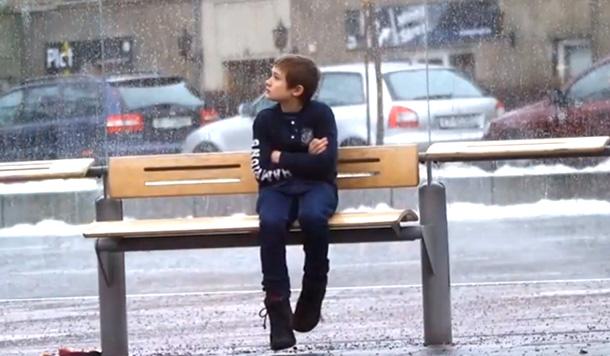
freezingkidIn November 2014, I remember lying in bed, wondering what could be done about a widespread problem in my church community: how could we help the dozens of kids in our community who were standing on bus stops and running errands in the freezing weather but didn’t have coats? The next day, I woke up and wrote this, and within two weeks, we had raised the funds and collected one hundred coats to clothe the kids in our community.

Thanks to people like you.

Like one of my best friends, who recruited his mom, his dad, and their community several hours away.

Like the mom of one of my best friend’s from college, who chose to use her inheritance to bless other people – the way her mom would have.

Like former church members who used 21st century shopping technology to pitch in from hundreds of miles away.

Like my parents, who raised me to see others as part of my responsibility.

Like youth who heard about the problem and wanted to help by collecting toys and coats.

Like “random,” God-ordained people who heard the story and stopped what they were doing to help.

This year, I find myself in a new community, but one desperately in need of some love … and coats. Most of the kids at the school where our church is involved are on free lunch; many of them are hurting for the support and help to have enough to eat (or clothes to wear). And the weather folks say this will be the snowiest winter in recent memory.

So, today, I’m asking you – do you have the ability to help? Can you make a difference? Respond here – find me on Facebook – or call Wesley UMC at 804-458-6932 and ask for Jacob. Or, start something in your community – make a change with the resources you have and the people around you.

No kid should have to face winter without a coat.

Posted in Uncategorized | Leave a comment

Sunday’s Sermon Today – More Than Stories: Freed By God (Exodus 12:1-13)

Freedom. It’s that thing we grasp onto but can hardly control. It’s the foundational principle that the United States was built on, that the Civil War was fought for, that is still held out as the standard for countries and peoples around the world. Sometimes, we take freedom for granted because we’ve never been the ones held down, we’ve never been the ones who don’t have enough, don’t have a voice, or don’t get the respect we need. Sometimes, we let ourselves be deluded into thinking we’re free when we make decisions about what we’ll fill our lives with. But if we’re filing our hearts with anything but Jesus, we’re not really free.

See, God is all about freedom, and God sent Jesus so we’d get freedom.

While God gave freedom to the first man and woman in the Garden of Eden, humanity squandered their freedom. Even when it comes to God’s people – the Israelites – freedom wasn’t always easy to grasp onto.

In our Scripture today, Exodus 12:1-13, God shows up and announces how the Israelites are going to leave Egypt. Now, the Egyptians have held the Israelites down, as they forced them into slavery and made them cower in fear, killing off generations of Israelites. But with Moses, God has raised up a leader to fight off the slavery – to establish freedom in God’s name. Without a struggle though, that freedom will be just a hope and dream.

So God announces that the Israelites are going to leave, carrying just what they need. God sets the community up to rely on each other – to establish a ceremony about what God has done before God has even done it! And then God proceeds to make all of his promises about freedom and covenant and future come true by wiping out the Egyptians but keeping the Israelites safe.

The Israelites are free! God made it happen. And yet, the Israelites wandered around for forty years because they couldn’t believe, they wouldn’t believe, that God was enough to free them. This is a story we heard before, isn’t it?

Imagine a place – let’s call it a prison – where everyone is bound in the darkness. Isolated, separated, struggling with their own issues. They only know the life inside of the prison – as did their parents before them and their parents before them. Their reality is the prison. Now, some of the prisoners do enough to get by but no one is really thriving; everyone in the prison – the prisoners – are just surviving. They recognize that there’s life outside of the prison, but they can’t imagine ever experiencing it.

And then one day a new person arrives in the prison. He’s not like any of the other people but he makes himself one of them. He goes from person to person, pointing out to them that they are actually free to leave. The doors of their prison cells are not locked; there are no guards at the doors.

But the prisoners are so scared of what might be outside of the prison – so scared of how their lives might change – so comforted where they are – that the prisoners kill this new man and throw him out of the prison. In the days that follow though, something happens – some of the prisoners begin to wonder if the new man was right.

Gradually, one by one, and occasionally in pairs – some of the prisoners begin to leave the prison, and form a community outside the prison’s walls. After a few weeks, this new community formed in the name of the new man begin to send people back into the prison to share this good news, that the prison locks are broken, that the people there are already set free if they would just believe.

Friends, this is the story of Moses – and the reality made by the gift of Jesus Christ to the world. And still today, with the truth of the Son – of that New Man – present in the world, people are still taking Jesus, and throwing him out of the prison.

Are we guilty of that?

We have been offered freedom – but are we truly free?

Noah Spence was on top of the world. As a linebacker for Ohio State University, he was a big man on campus and a sure-fire NFL talent. He came from a good home, cared about his schoolwork, and did what he was supposed to. But then he discovered that he liked to party – and experimented with ecstasy. He still completed work on the field and in the classroom, averaging As and Bs, so he figured that everything was going fine.

Until he received a drug test randomly and found himself temporarily off of the team. Repentant, he stayed free and clear of the drugs, and worked his way back into nearly acceptable status. Heading into the last weekend of the summer before his junior year, he went out with friends – and did ecstasy one more time.

Unaware that a final drug test loomed for him the first Monday of school.

A second offense found Spence off of the team. Utterly broken, he repented to his parents and to his coach, Urban Meyer. He entered drug rehab, and continued to work on his education. Upon watching his remorse – and determination – Meyer recommended him to a friend coaching at the smaller Eastern Kentucky University football team where he proceeded to tear up offensive lines. Impressively, he exploded at the Senior Bowl, and continued to send his drug tests (all clean) to every NFL team.

Spence thought he had it all together. He thought he was in control of his destiny – and his needs. But several poor decisions – and one last second loss of self-control – jeopardized everything.

We might too quickly say, “Well, I’ve never lived in prison. I’ve never worn chains” or ” I’m not addicted to illegal substances, that’s not me.” Or, “I read my Bible, say my prayers, and go to church, I know I’m free.”

And yet, when left to our own devices… are we truly free?

Every week, I meet with people whose chains may not be made of steel and cuffs, but whose shoulders are bent by the weight of the bondage.

They’re bound by the things that others have done to them, or by the weight of someone else’s expectations.

They’re bound by the addictions to themselves, to chemicals or ‘stuff’ or money or relationships.

They’re bound by the messages they hear from the media, that tells them that violence or political parties are stronger and more important than the good news of Jesus Christ.

They’re bound by -isms, the racism, the sexism, or atheism – all things which deny God.

The thing is – oppressed people recognize the good news of the gospel more easily than those of us who have grown comfortable. They recognize that Jesus wouldn’t vote Democrat … or Republican, that Jesus would’ve marched in #BlackLivesMatter campaigns and shown up at Gay Rights parades, that Jesus would’ve comforted abortion doctors and those undergoing abortions, that Jesus would have shown up in church … and outside church, that Jesus would’ve been where the least and the last and the lost were.

Because Jesus shows up in the midst of our prison, and tells us that we’re actually free. And then he asks those who believe in him to do something about making others free.

Jesus shows up like God showed up in the life of the Israelites and says, “Celebrate your freedom – because I’ve already set you free.” After God had already called Moses to be part of the freedom revolution, the underground revolution, the holy non-violent jihad of epic, Biblical proportions. Then God freed God’s people and told them to live right, to walk with God, to love each other. It wasn’t enough to free them from shackles of steel; God wanted to free their souls, too.

Paul wrote about it this way: “Therefore, remember that formerly you who are Gentiles by birth and called “uncircumcised” by those who call themselves “the circumcision” (which is done in the body by human hands)— remember that at that time you were separate from Christ, excluded from citizenship in Israel and foreigners to the covenants of the promise, without hope and without God in the world. But now in Christ Jesus you who once were far away have been brought near by the blood of Christ…Consequently, you are no longer foreigners and strangers, but fellow citizens with God’s people and also members of his household, built on the foundation of the apostles and prophets, with Christ Jesus himself as the chief cornerstone” (Ephesians 2).

We weren’t always in but sometimes, we forget what it was like to be out.

I am reminded of the story of Nelson Mandela, held captive for 27 years as an enemy of the State of South Africa, for protesting that all humans were meant to be free – and equal. His freedom was a big deal for him personally, but his response to being freed was remarkable. See, Nelson Mandela chose not to hate his captors or those who persecuted him, but instead chose to recognize that he was freed to spread freedom. And hate would’ve just chained him down. Mandela had been in chains of human making, and he wasn’t interested in being bound by emotional chains. In fact, Mandela said, “For to be free is not merely to cast off one’s chains, but to live in a way that respects and enhances the freedom of others.”

Today, friends, I want to remind you that you’re free. I want to remind you that Jesus Christ died on the cross for your sins before you were ever born.

Jesus died for the addicts, for the selfishness, for the brokenness, for those violent in word or deed. Jesus died for the excessively smart and the amazingly naive. Jesus died for those in the ‘burbs and those from the wrong side of the tracks. Jesus died so that we could stand up and scream “and they will never take away our freedom”… by dying on a cross.

Jesus died for our freedom.

The beauty is that God didn’t let it end that way, because God freed Jesus from death.

God wanted freedom to be more than a piece of paper, more than a thought, more than a cause.

God wanted you to do more than survive; God wants you to thrive. But you have to make that decision for yourself – to accept God’s offer. Because you can stay in the prisons with no doors. Or you can be free.

Once you’re free, there’s nothing that can hold you back – no physical, mental, emotional chain that will keep you from recognizing who you are. Yes, there will be challenges; yes, there will be struggle. But in the onslaught of God’s freedom, in the power of the kingdom of God, you will shout like every prisoner freed before you:

“Ain’t no chains on me!”


Posted in Sermons, Theology | Leave a comment

Sunday’s Sermon Today – More Than Stories: What Does Forgiveness Look Like? (Gen. 37)

It all starts with a dream, ends up in a nightmare, and somehow ends happily ever after. It’s the ridiculous story of the life of Joseph that never seems to be typical but somehow shows us the miraculous love of God and the power of the Holy Spirit to transform people. Last week, we saw these truths in the lives of Jacob but he was the main culprit in his own tragedies; in Genesis 37, we realize that for the personality he shows, it’s really about how he responds to the things that are done to him.

Remember how Isaac and Rebekah played favorites, where Isaac loved Esau and Rebekah loved Jacob? Remember how that caused all of the problems with Jacob and Esau last week, and how it almost lead to bloodshed? It’s all part of the wonderful family dynamic we see in Joseph’s story here: Jacob hasn’t really leaned anything, and he makes it clear to Joseph’s other ten brothers that Joseph is the favorite.

How many of you know you were the favorite child growing up? How many of you know you weren’t? There’s pressure being the favorite, being the one who is always supposed to do the right thing- but for ones who have not been the favorite, it’s hard to convince yourself that anything could be better.

In Joseph’s case, Jacob has painted a target on his back: he gives him a beautiful coat of many colors. He makes him stand out in the middle of his own family- and naive, seventeen-year-old Joseph, he just makes it worse.

Now, think for yourself about the choices you made at seventeen. Were they wise? Were they focused on others? Or did you tend to think about yourself more often than not?

Joseph aggravates the situation first by tattling, telling Jacob about how the other brothers were hanging out rather than working hard, and second, he tells the family about two dreams he had where he was the hero (Genesis 37:1-10). First, he tells them about a dream from an agricultural perspective, where Joseph was a giant bundle of grain — and his brothers were smaller bundles, who bowed down to him. They hate him for it and then he tells them about a dream where they were all stars that bowed down to his brighter star.

You just want to shake him, right? You want to tell him how the way you treat people can come back to haunt you, but as a teenager, would you have listened? And no matter what was said or done, does Joseph deserve what comes next?

Joseph goes out to visit his brothers, most likely on the orders of his father (Genesis 37:18-25). The brothers figure that this is the chance to even the playing field, to remove Joseph from equation, to do what they’ve always wanted to do: kill Joseph. But one of his brothers, Reuben, pleads with the others to sell him into slavery rather than kill him. So, Joseph’s sordid next few years go like this:

-Joseph is sold to traveling slave traders, not exactly known for their kindness and compassion. Joseph is treated like an animal and carried miles away from home, where he is then sold into the possession of Potiphar, one of Pharaoh’s officials, in Egypt.

This is where we think, like a good African story, that one of the low points hasn’t worked out too badly, because working as a servant in Potiphar’s house is better than forced labor building pyramids. Of course, things do go well enough for Joseph in Potiphar’s house until…

-Potiphar’s wife comes on to Joseph amorously, and when he rejects it honorably, not wanting to betray his master, she accuses him of rape. Potiphar sides with his wife (how could he not?) and Joseph is sentenced to prison indefinitely.

Again, our narrative takes us back to a ‘high’ point of the story, because Joseph proceeds to interpret the dreams of the cupbearer and the baker correctly, and soon finds himself interpreting Pharaoh’s dreams. From the penthouse to the cellar and back again…

Now, years removed from being nearly killed by his brothers, sentenced to life in prison by his master, and a life of slavery, Joseph is the number two in Egypt. He’s in charge of caring for all of the supplies in a time of plenty- like a leader who knows the recession is coming and starts stockpiling everything for a day when it will be needed. And suddenly, Egypt is a place where everyone else wants to come because they have enough to go around.

The famine that Egypt is ready for because God used Joseph’s dreaming and interpreting to prepare the country is hammering Jacob and his remaining sons. So Jacob sends them to Egypt, and they find themselves interviewed by the Pharaoh’s number two, who they don’t recognize as their own brother. They do a figurative dance, trying to impress on them why they need the food, and he tests them, ultimately getting them to reflect on what they did to Joseph all of those years ago.

And then Joseph reveals himself to them and he says, “I am your brother Joseph, the one you sold into Egypt! And now, do not be distressed and do not be angry with yourselves for selling me here, because it was to save lives that God sent me ahead of you. For two years now there has been famine in the land, and for the next five years there will be no plowing and reaping. But God sent me ahead of you to preserve for you a remnant on earth and to save your lives by a great deliverance” (Genesis 45:4b-7).

Years later, when Jacob dies, the brothers become concerned that Joseph has just been biding his time, that this is Revenge or The Count of Monte Cristo and he is now going to make them pay. But Joseph says, “Don’t be afraid. Am I in the place of God? You intended to harm me, but God intended it for good to accomplish what is now being done, the saving of many lives. So then, don’t be afraid. I will provide for you and your children” (Genesis 50:19-21).

I wonder if that’s what it felt like to be Chesley Sullenberger in the eighteen months after he safely landed US Airways Flight 1549 in the Hudson River. This one man went to work one day, flying as he had flown for forty years before, and pulled off a maneuver very few people could safely pull off — and then they put him on trial behind the scenes for eighteen months. Eighteen months of watching the computer diagnostics, and eighteen months of cross-examinations.

Even though he hadn’t done anything wrong.

Even though his decisions saved 155 people from dying.

Even though he did the best he could in the situation.

And yet, Sully never let his temper get the better of him; he never pointed fingers. Sully never thought he was bigger than the system, but he recognized he’d been put there for a reason.

Can you imagine? No, I don’t mean all of the negative stuff. Sure, some of us have been betrayed by our families, torn from places and relationships we love and struggling with finding a new place to stand, forced to suffer the trouble of other people’s lies, and locked in a prison that life seems to have formed around us and thrown away the key.

No, I mean, can you imagine… forgiving those who’ve hurt you that badly?

Can you imagine finding the reason for why all of the trouble and suffering had come your way as God had sent you through it to bless other people? Can you imagine looking the people who have caused it in the eye and saying, “You tried to kill me but God used this to save, well, everyone.”

Joseph stands in front of his brothers and basically does the sort of things and says the kinds of things that Jesus will say on the cross. Joseph says the kinds of things that Paul proposes in Ephesians 4- again, a man writing from his chains, imprisoned for something that’s not even a crime- telling us to “put on the new self” (something unnatural and better than human ‘normal’). [Paul will later write in Colossians 3:13 that we should “bear with each other and forgive one another if any of you has a grievance against someone. Forgive as the Lord forgave you”.

There’s Joseph, essentially saying that he refuses to let the sun go down on his anger, that he will rid himself of bitterness, rage, and anger, and instead be full of kindness and compassion, “forgiving each other, just as in Christ God forgave you”. But wait…

Joseph doesn’t have any idea who Jesus is! Jesus hasn’t said, “For if you forgive other people when they sin against you, your heavenly Father will also forgive you. But if you do not forgive others their sins, your Father will not forgive your sins” (Matthew 6:14-15).

Joseph doesn’t have the example or teachings of Jesus to fall back on. He can’t point to the cross and say, “Now I get it, that’s why I should hold on a little longer, smile a little bigger, take a little bit of joy when there is none…” Joseph doesn’t have Jesus to look at; Joseph doesn’t know about the cross.

Now, I don’t think life is a game, but if I were to use life as a game as some kind of cosmic parable, it might play out this way:

There’s a smoky room, although its more dry ice than nicotine, and the beverages look more like unfermented grape juice than adult beverages. But there’s a circular table and poker is being played. Not by dogs but by figures you’ve heard of before: Moses, Noah, Jesus, and … the devil.

Moses says, “I’ve got this,” and throws down a hand of cards that look suddenly like several of those famous Ten Commandments that Trouble aka the Trickster aka the Devil sits there, smoking, all cool and collected: “I see your hand and I raise you suffering, sickness, death, frustration, misery, and war.”

Noah starts to protest, “But I’ve built this ark…” and the Devil just smiles, smugly expecting his hand is downright unbeatable.

Still, there’s one hand left to be played. Softly, tenderly even, the final player, Jesus, all laid back except for the nail holes in his hands looks down at his final cards, and lays them down:

“I raise you- a cross.”

That’s the final word on forgiveness, isn’t it? Joseph, he forgave, but he probably had the sense to realize that fair or not, his seventeen-year-old self didn’t do him any favors. He probably realized that things could’ve been much worse.

But Jesus? Jesus didn’t do anything wrong to anyone. He lived, he loved, he encouraged people to cling to God. And he was strung up on a cross for his troubles. But he forgave anyway- and he continues to forgive us.

So what are we going to do about it? Who have we been holding in contempt- who we really have no right to? No matter what they’ve done to us- we’re all separated from God because of our sins, no one’s better and no one’s worse.

No matter what, we’re supposed to forgive.

The spouse who betrayed our trust. Forgive them.

The parent who mistreated us growing up. Forgive them.

The boss or coworker who made us feel small. Forgive them.

The friends who failed to be fully present when we needed them most. Forgive them.

The church that lost sight of keeping the main thing the main thing and thought Jesus cared more about judgment than grace. Forgive them.

The people we see everyday when we look in the mirror, realizing how stupid some decisions have been and how badly we’ve mistreated others. Forgive them.

It doesn’t matter what you’ve done, what’s been done to you, who you should’ve been. If you accept the death of Jesus on the cross for you, I have good news for you:

“In the name of Jesus Christ, you are forgiven.”

Not “might” be forgiven. Not will be if certain conditions are met. No, to all the stuff you’ve done weighing heavily down on one side of the scale, Jesus drops two pieces of timber in the shape of the cross on the other side, and suddenly, the other side fades away.

Forgiveness. It’s crazy, unnatural and contagious. Pass it on.

Posted in Sermons, Theology | Leave a comment

Sunday’s Sermon Today: Wrestling With God (Gen. 32:24-32)

The sun is just starting to come up over the hills in the distance, and he can see the figure of the angel walking away into the mist of the early morning dew. Lying battered and bloody, Jacob lays beside the river, exhausted. He’s wrestled an angel of God all night, and survived, but what’s the cost? What does it mean for his future? How did he get here?

To understand the story of Jacob’s wrestling with the angel, we must look at Jacob’s story before.

We know that while they were still in the womb, that Jacob and his brother, Esau, struggled against each other, causing unpleasantness for their mother Rebekah (Gen. 25:22) to the point that she prayed to God and asked, “Why would God make this so hard for me?” And God’s response is that the younger would be stronger than his brother, and the elder would serve the younger.

We know that in the line of Abraham, Isaac, and Jacob, something must’ve happened to upset the apple cart, the natural order of how birthright and favor look: why else would a second son be the one included? [Abraham was his father’s first son; Isaac was Abraham’s first… legitimate… son.] Apparently, God knew from before they were born– working against the natural order, the expectations of what was valuable, both in what God would choose and in knowing it in advance!

We know that Jacob was… a mama’s boy. While Esau was out doing the necessary things that a tribe needed, hunting, fishing, gathering, etc., Jacob stayed at home where he gained his mother’s favor. Now, we’ll get to real favoritism next week with Joseph, but note this: Isaac picks Esau and Rebekah chooses Jacob as her favorite– this is bound to cause problems, is it not?

So we arrive at our first crucial point for Jacob and Esau, when they’re teenagers. We know that Esau came in hunting, that he has the animals he’s killed but that they’re not ready to eat (Gen. 25:27-34). In a flash, he trades over a bowl of Jacob’s bean soup for his birthright, for whatever it would be that Esau would receive from Isaac as the firstborn. Esau wants the immediate, what feels good, the payoff– Jacob is already looking at the big picture.

Fastforward to Isaac’s old age, when Isaac calls Esau in, tells him to prepare a well-hunted meal, and that he will give him his blessing (Gen. 27:1-29). A blessing to Isaac’s family that was part-will and testament, part-prophetic. To them, the words of Isaac would be more than well-wishing or a toast at a banquet; these were the words that the people of Isaac’s family would believe were life-giving, determining the success of his children.

But Rebekah, remember, she who chooses Jacob first, whether it’s because of the time she has spent with him or because of the word she received from God or both- she interferes and steers Jacob into a plot that involves disguises and deceit. Jacob steals his brother’s birthright, deceives his father, and moves from deal broker/swindler into liar/cheat territory. Sure, it’s a slippery slope, but it’s one that Jacob slides down pushed by his own mother! Norman Bates he’s not, but this is the same type of critical family dysfunction that’s been going on since Adam blamed Eve and Cain killed Abel over some butter beans.

Of course, the fall out is almost immediate. Jacob is blessed; Esau gets the scraps. Rebekah has won; Isaac is dying anyway. But Jacob must run because Esau promises to kill him once they are done mourning his father. Again, Rebekah intervenes, sending Jacob away to her brother’s home “until Esau’s anger cools and he forgets what you have done to him” (Gen 27:41-45). Seriously? Not only does Rebekah naively (?) think that this will somehow be swept under the carpet but she practices that wonderful super power of manipulators everywhere: she pretends like she isn’t the one to cause all of this!

Off goes Jacob to ‘visit’ with his uncle. He heads back toward where Abraham would’ve come from, back where everyone from Abraham’s family stayed except for Abraham and Sarah who had been called out by God. It says that he arrived at a holy place and lay down to sleep, resting his head on a stone (Gen. 28:10-18). It’s the dream of the stairway to heaven made so famous by Led Zeppelin (I joke, I joke). But too often, I’ve skipped to the dream or vision and missed the setting.

Jacob puts his head on a stone. It doesn’t even say that he takes a stone as a pillow. Either way, it can’t have been comfortable- and it certainly wasn’t the kind of trip that you could find on Travelocity. No, it seems that Jacob was sent away in such haste that he didn’t pack, that he didn’t have the normal tent and bedroll that his people would’ve taken to travel, and when he arrives at this holy place, he collapses against the altar there.

The journey has been exhausting, the euphoria of the blessing has worn off. Jacob is alone, frightened, probably ashamed, and frankly, wondering why a game of dress up has ended with his running from the scene of the crime. And yet, while he sleeps, God speaks.

The LORD of Abraham and Isaac speaks and says, “I will give to you and your descendants this land on which you are lying. They will be as numerous as the specks of dust on the earth. They will extend their territory in all directions, and through you and your descendants I will bless ALL nations” (emphasis mine).

This isn’t too tricky, right? Other than skipping the firstborn, God is saying the same thing he told Abraham.

But the LORD continues, “Remember, I will be with you and protect you wherever you go, and i will bring you back to this land. I will not leave you until I have done everything I promised you” (Gen. 28:15).

Now, that’s terrifying to Jacob. Not that he’d have a vision. Not that the LORD would speak. But that the LORD would speak here when he and his people believed that so much of what they knew about the gods of their day was locational. And the LORD shows up … here. Wherever here is. After all that Jacob has done. Like the LORD was really with him.

So, when Jacob wakes up, he makes a vow: “If God will be with me and will watch over me on this journey I am taking and will give me food to eat and clothes to wear so that I return safely to my father’s household, then the Lord will be my God and this stone that I have set up as a pillar will be God’s house, and of all that you give me I will give you a tenth.”

Still, the deal broker, isn’t he? Still working the system to wind up in his favor. He makes his obedience and his worship conditional, like so many of us do, ‘if God, you will do this, then I will do that.’ He’s still trying to give a dollar and get back ten, still trying to figure out how to make the best of the situation like he’s the one calling the shots. But apparently, he’s been paying enough attention to the family story, to the way he’s been raised, to know he should give God a tenth of what he has. It’s ingrained, learned behavior, but that doesn’t mean he actually gets it yet.

Short version of the next fourteen years: Jacob gets to his uncle’s house, works for seven years to marry the pretty daughter and gets the ugly one instead, works another seven years to marry the one he actually loves, outsmarts his uncle to take a bigger portion of the cattle herd than he would’ve gotten, and slips away in the middle of the night, knowing that his uncle wouldn’t have let him leave.

But for the first time in his life, we see Jacob initiate prayer with the LORD (Genesis 32:1-21). Now, he does devise a plan for how to make things more palatable for Esau, to try to grease the wheels of forgiveness, but he also puts it all before the LORD: “God of my grandfather Abraham and God of my father Isaac, hear me! You told me, LORD, to go back to my land… and you would make everything go well for me. I am not worth all the kindness and faithfulness that you have shown me, your servant… Save me, I pray, from my brother Esau. I am afraid–afraid that he is coming to attack and destroy us all… Remember that you promised to make everything go well for me and to give me more descendants than anyone could count, as many as the grains of sand along the seashore” (Gen. 32:9-12).

In response, the LORD appears… or at least sends an angel in the form of a man to Jacob. And they wrestle (Gen. 32:24-32). Now, of course, every time I’ve thought about this story, I’ve thought of something principled, something… somewhat gentle. Like my boys wrestling, or even something like Olympic Greco-Roman wrestling. Something with rules.

But the longer I look at this story, and the longer I consider what it looks like in my own life, the more I think this is more like MMA (Mixed Martial Arts). The more I think it is devoid of nice, or mercy, or … rules. I think that Jacob and this man did everything they could from the setting of the sun to the rising of the sun the next morning to defeat, beat down, control, manipulate their adversary. I think this was the microcosm of what Jacob’s whole life had been about- trying to figure out who he was in the world by whatever means necessary, whether it was fair or not.

In the end, it says that the man could not beat Jacob, so he cheated. Or at least, it seems like he cheated. But if there are no rules…? The man did what he needed to do to give himself an advantage, and caused Jacob’s hip to be thrown out of joint (Gen. 32:25).

And Jacob still will not let him go. Jacob, exhausted, beaten, bloodied, sore, alone, and terrified will still not give up.

Whenever I preach on Jacob, I’m teased about how my name is synonymous with a cheater and a deceiver and a coward. But somehow, Israel, he who has wrestled with God and men and not been overcome, that sounds pretty good! Because Jacob was relentless in his pursuit of the blessing, single-minded in his desire to be made right with the LORD. He took everything that his family, his personality, his enemies, his situation, and the LORD threw at him, and shouted into the abyss:

“YOU CAN’T STOP ME!”

So, Jacob, born second and meant for a life of leftovers, rose to the top spot, became a friend of God, became the third notary in the trinity of Abraham, Isaac, and Jacob, and … walked with a limp for the rest of his life.

How many of you have ever broken a bone? Have arthritis or tendonitis?

There are not many, if any, moments where you can forget that. You might have times where you feel better, but the ache doesn’t ever really go away. Kind of like a hip joint that has been put out of place, may be put back into place… but it will still ache.

I know that when it rains, the leg that I broke playing soccer aches. I know that when I am stressed, my jaw grinds at night, and locks in the morning. And I remember.

But what does Jacob remember? Jacob remembers that he was in a dogfight for his life, physically and spiritually, and that he was rewarded because he did not give up. He was ultimately blessed by the LORD because he held on.

Jacob didn’t build an ark. He didn’t name all of the animals in the garden. He didn’t move his family from his ancestral homeland out of honor for God.

Jacob didn’t give up. He held on. He believed in the promise.

Jacob was broken in spirit by life’s tricks and turns, but he held on.

Jacob was broken physically by wrestling with God, but he held on.

Jacob could have given up, tapped out, cursed God, abandoned his faith, fled in the opposite direction, but he held on.

Jacob was broken but he let God put him back together. Jacob let God form him as he’d promised first to Rachel, and later to Jacob. But the breaking had to happen first, the melting down of the pride of the deal maker and the cheater and the deceiver. Jacob’s personality wasn’t lost but the place he put his trust had to change.

When I think of that reshaping, that refining fire of God on and in us, I think of the parable of the potter’s house that God tells Jeremiah (Jer. 18:1-4). The LORD tells Jeremiah to go to a potter’s house, where clay is made and formed. Jeremiah sees the potter working at the wheel, but the pot becomes misshapen, and he has to reheat it and reshape it. And the result is good.

This image of clay gets revisited by Paul in 2 Corinthians 4:7-11: “But we have this treasure in jars of clay to show that this all-surpassing power is from God and not from us. We are hard pressed on every side, but not crushed; perplexed, but not in despair; persecuted, but not abandoned; struck down, but not destroyed. We always carry around in our body the death of Jesus, so that the life of Jesus may also be revealed in our body. For we who are alive are always being given over to death for Jesus’ sake, so that his life may also be revealed in our mortal body.”

We are fragile, made up of flesh and soul, and we break. Sometimes we are misshapen by our sins, and our choice; sometimes we are misshapen by the sins of Adam and Eve played out through our bodies and the world, of original sin; sometimes, we receive the bloodied lips and bruises from the free will misused by others. We have the scars from our wrestling matches with others, with ourselves, with God.

But if we will just hold on, if we will not give up, if we will remember that the LORD who promised to be forever with Abraham and Jacob, who promised us much through the death and resurrection of Jesus, then we will overcome. We will receive the inheritance of God’s promise, whether in this life or the next.

We are the reminder to those who are broken, to those who have not yet been broken, that the world is not the way it will forever be. That we believe in a world with no suffering and no pain and no war and no sickness and no evil. We believe in a world where the power of the risen Christ is the only light we will need.

Sometimes, some days, when I struggle to see that in my petty problems, I remember:

-the people who sit through hours of chemotherapy and believe that God sits with them.

-the people who have been divorced or lost a spouse who believes that God hasn’t written the end of their story yet.

-the people who have taken the abuse they’ve received, the pain they’ve endured at the hands of others, the tears they’ve shed, and turned them into ministries and caring for those who would suffer the same fate.

-the times when God showed up in the midst of my darkness and said, “just hold on, I’ve got this, you are not alone.”

This is not trite or simple or easy. This hurts sometimes. But it is the truth of our reality, the here and the not yet colliding, that we believe, and we hope, and we pray for that day when God will make all things new.

We may walk with a limp, we may need the help of others to help us get up, but we will celebrate with the body of the risen Christ, once broken and left bloodied itself, that we have been adopted by the great God of the universe, and we can shout into the abyss of our doubts, our fears, our frustrations, our enemies, our anxieties, our inner demons, with the assurance of God:

“YOU CAN’T STOP ME!”

Posted in Sermons, Theology | Leave a comment

Sunday’s Sermon Today: More Than Stories – Who God Calls (Gen. 15:1-17, Heb. 11:8-16)

Is there a call you dread getting? A call you try to avoid on a regular basis?

As a United Methodist pastor, I am always checking my caller ID from February through April. That’s the time of year when the District Superintendent calls to ‘project’ a move, a relocation of jobs (and families). It’s nerve-wracking to get a call from the District office during that time, unless you have been told you’re going to stay.

Likewise, September through October is the window in the life of the church when nominations are being made for the following year. Some of you know this because you’ve been part of a conversation (or two) about how you might serve the church next year. Some lifelong Methodists are keen enough on this that when they see the preacher coming, they try to hide! And you think I’m kidding…

But there are two components to every call, whether it’s a phone call or God call: there’s the caller’s message and the receiver’s response.

Today, we’re looking at the story of Abram – the man who became Abraham – who received a call from God out of the blue in Genesis. God shows up several times in the narrative, telling Abraham different things he needs to know. But God is always stressing this “covenant” that God wants to make.

The first time, God shows up in Genesis 12 and says:

“Go from your country, your people and your father’s household to the land I will show you. I will make you into a great nation, and I will bless you; I will make your name great, and you will be a blessing. I will bless those who bless you, and whoever curses you I will curse; and all peoples on earth will be blessed through you.”


God shows up and tells Abram, rather bluntly, to leave where he is, to turn his back on his family, and his ancestral land. It comes with the “carrot,” that God will make him into a great nation, will make Abram powerful and famous, and that he will BE a blessing. God basically tells Abram that he’s going to use Abram to have a powerful impact on the world IF Abram will be obedient to leave and go. God’s first big test for Abram is to leave what he knows, to put aside the comfort and security of the life he has lived, and to go on faith that God will take care of the rest.

Don’t you wish God would show up and communicate so clearly? I wonder if that provided Abram with any comfort or if he wished God would use a different form, less signs or more cowbell? I wonder what it would take in our lives for God to get our complete and absolute attention?

A new pastor moved into a town, and he went out one day to visit  his parishioners. All went well until  he came upon this one house.  It was obvious that someone was home, but no one came to the door even after he had knocked several times. Finally he took out his card, wrote on the back “Revelation 3:20” and stuck it on the back of the door.

Revelation 3:20: “Behold, I stand at the door, and knock: if any man hear my voice,  and open the door, I will come in to him, and will dine with him, and he with me.”

Later in the week, as he was counting the offering, he found his card in the collection plate

Below his message was the notation “Genesis 3:10.”

Genesis 3:10: “And he said, I heard thy voice in the garden, and I was afraid, because I was naked: so I hid myself.”

So, at the ripe young age of seventy-five, Abram goes. And takes his wife, Sarai, and his nephew, and their entourage, and they begin their journey. It doesn’t take long (Chapter 13) before Lot and Abram split because Lot says there’s not enough space for all of their people. It’s like a RISK or Monopoly power play: he who controls the land, controls the power. And Lot doesn’t just want to follow Abram around: he wants a piece of it for himself. What God had intended for unity, for that ONE TRIBE, Lot couldn’t accept because he wanted more than his share.

Of course, Lot gets himself in trouble, several times really, and Abram rescues him. Sarai worries that her barrenness means that God’s plan needs some “help,” so she has Abram sleep with Hagar; Abram keeps asking God what he really means about a blessing. And then we get to chapter 17, and God lays it all out there. “I’m going to make you the father of many nations, to be fruitful” (echoing those words he spoke to Noah after the flood.) “I will be your God and your descendants’ God. You will no longer move from idol to idol when you move about, but will recognize that I am your God.”

God is presenting something countercultural and fantastic: that one God would be enough, would fulfill everything that a person or a tribe could ever need. “But this covenant is one we’re going to keep. I’m the higher power, and you’re the lesser. And the sign that you get this is circumcision.” Sounds painful, right? But the thing about the covenant was that God gave Abram and Sarai new names, Abraham and Sarah.

And God promises Abraham a son, because without a son, he can’t really be the father of a nation, or the beginning of a tribe. It spoke against his character within the tribe; it meant that he wasn’t on the same level with his people. But God is not done with Abraham, or Sarah, or even Lot. God’s desire for Abraham and Sarah brings them through some crazy situations, through Sodom and Gomorrah, through Abram faking that Sarai is his sister not his wife, through old age and childbirth. And the same Abraham who so compassionately pleads for his nephew and for the cities of Sodom and Gomorrah, he gets tested by God at the very threat to the thing he loves the most: his one and only son.

This story from Genesis 22 still gives me chills. I remember the first time I ever preached on it. It was the spring of 2008, and our first son had just been born in March. I don’t know what caused me to preach on it, or why I thought it was a good idea at the time. But I set out to unpack the story of Abraham’s preparations to sacrifice Isaac. And I got so choked up I couldn’t talk.

Here’s Abraham, minding his own business, having been fully obedient to the words of God, and finally, after years of wandering, and fighting, and struggle, he’s reaping the rewards. Maybe he’s just sitting in the opening of his tent, just soaking in the wonder of his boy playing outside. And God calls. God says, “Take your son, your only son, whom you love—Isaac—and go to the region of Moriah. Sacrifice him there as a burnt offering on a mountain I will show you.” Again, I’m all about questions. I don’t ask for directions, that’s where I cross the line. But I mean, c’mon, “did I hear you correctly? You want me to take Isaac, the kid we sweated over, that you promised, that we waited a century for … and what? I must’ve missed something.”

But it says that the next day, early in the morning, Abraham loads Isaac up and heads for the sacrifice site. And he takes his son on the road to certain death, to sacrifice on an altar to the God who says that he loves him, and who loves his son. Isaac is old enough he knows what’s going on. “Um, Dad, we’ve got fire, wood, a really big knife… but where’s the lamb?” Abraham provides one of those answers we say, but we’re not really sure that what we want and hope for and need is actually what God has in mind: “God himself will provide the lamb for the burnt offering, my son.”

So Abraham builds an altar, ties up his son, and lays him on the altar. And draws back the knife and God calls out “Abraham! STOP!”

AND THERE’S A RAM CAUGHT IN THE THICKET.

And God says, “I swear by my own name, that because you have been obedient and not held onto your son, your only son, I will bless you. Your family will be as plentiful as the stars in the sky and as the sand on the seashore. And all nations on earth will be blessed, because you have obeyed me.” This is the moment when the children of Abraham begin to become ONE TRIBE. When God established that the remnant saved on the ark wasn’t just one family but was an incorporation of people into ONE TRIBE, originated by the faith of one man. That people who never knew Abraham would receive God’s blessing.

Of course, this is the ONE TRIBE later fulfilled in the birth, life, death, and resurrection of Jesus. ONE TRIBE of people lifted out of sin, out of pain, out of rejection, out of despair to a life of hope, joy, and eternal relationship with God. This is the ONE TRIBE that should be unified in the Church (big “C”) but which too often is full of disunity and struggle, because ultimately, we’re still human. But the good news is that one man was willing to sacrifice his one and only son, the thing he held the most dear, to be obedient to God… and that God, who saw a heart that was willing to go all the way, would one day sacrifice his one and only son, the thing he held the most dear, to save ONE TRIBE from their broken situation.

Funny how things have a way of working out, how Abraham was just a precursor of the sacrifice God would go all the way with. Funny how obedience by a father reflects obedience by THE Son. But there’s nothing funny about being obedient to the call, no matter how hard, and recognizing in that sacrifice that God sees men (and women) after his own heart.

What is so dear to you that you could never lay it down? Even if God asked you to? Maybe he’s not calling you to lay it down. Maybe he will some day. But does your obedience to the call of the almighty, creator God resonate with you in a way that you’d go to your cross and lay it all down?

In Hebrews 11:8-10, it says, “By faith Abraham, when called to go to a place he would later receive as his inheritance, obeyed and went, even though he did not know where he was going. By faith he made his home in the promised land like a stranger in a foreign country; he lived in tents, as did Isaac and Jacob, who were heirs with him of the same promise. For he was looking forward to the city with foundations, whose architect and builder is God.” Abraham knew he was building something new. He knew that God’s promise of ONE TRIBE was so crazy, so ridiculous, that it had to be true. He went looking for something to hold onto, but he knew that he had to let go of what he did have if he wanted to gain more. If all of us were as giving as Abraham… wow.

Are you there? I have some work to do.

We could beat ourselves up pretty good about how we’re NOT like Abraham. Or we could recognize that God still speaks, in strange and mysterious ways, calling us from our comfort zone, asking us to lay down the stuff that’s filling our hands, so we can take up a new mission, and become better than we ever thought we could be. Merely asking us to be obedient to the call. Later in Hebrews 11, it says that by his faith, Abraham showed that he knew God’s promises would come true even if they weren’t through Isaac.

Abraham believed that dream wouldn’t die—that God could resurrect it one way or another. What we give up for the sake of God’s “tribe” comes back to us in full. What Abraham gave up was returned to him by a miraculous ram. What God gave up in Jesus was returned to him by the saving power of the resurrection.

What is God calling you to give up? Are you ready? Is it to sacrifice your expectations about your life or your church, to be Jesus even when it costs something? Is it to embrace someone not like you, who doesn’t believe what you do, and love them with the assurance that God’s grace is enough? Is it surrendering your dream to God, and recognizing that God’s will for your life is better than you can imagine? Is it laying you down so that others might truly live?

In every story that’s been told about a hero, the “good of the many has outweighed the good of the few” or the one. It’s true in the story of Jackie Robinson a real life hero who endured verbal jabs and worse to break the color barrier in baseball. It’s true in the story of Superman, as told by various authors over time.

Self-sacrifice is what unites the one tribe of Abraham: That of a group dedicated to the belief that life will be better for all, once we lay aside our personal needs and pursue God’s hope for us all. I call that group “church.”

In all things church, I am constantly reminded that each time God called someone, that God equipped them.

They didn’t have what it took initially. They weren’t prepared. But they were obedient.

Abram wasn’t ready when God called him, but he went.

Abram wasn’t a warrior but he rescued Lot.

Abraham desired a son but he was ready to give him up.

Abraham wasn’t perfect, but when God called, he answered.

And in each moment where Abraham gave up something, God gave something back even greater. God used Abraham’s obedience to make the nation of Israel, to serve as the foundation for the people of God now united in Jesus.

God blessed Abraham so that Abraham could be a blessing. God blessed the world through Abraham.

So ask yourself today: What is God calling me to do? What has God already worked in my life that I can use to be a blessing for others? What gifts do I have that I should be sharing? Is it quiet service in the back? Is it playing an instrument up front? Is it teaching our young people? Is it inviting others to church and welcoming them in?

God equips those he calls and God calls us all.

Are you listening? Or are you hiding, hoping God won’t notice?

We know the caller ID. He’ll just call back.

Posted in Sermons, Theology | 2 Comments