
Sunday’s Sermon Today: Got Peace? (Fruits of the Spirit)

Peace is a fleeting thing. In a world marred by fights and squabbles, shootings and social media slandering, we can sometimes feel like the only way forward is to fight.

Just a week ago, Will Smith, a retired defensive end for the New Orleans Saints, was gunned down by a man who had previously rammed his Hummer into the back of Smith’s car. Smith’s loaded gun was found in the glove compartment of his car when police arrived on the scene. Neither man left the house knowing that this altercation would turn deadly but both left with armed weapons, and one chose to use his.

In the Middle East and around the world, even in our own cities and communities, violence and unrest continues. People are bullied, physically and emotionally, and anxiety grows as they chose to bully back or not. That’s the message being bandied about in political presentations around the country now. “Those are your choices: be bullied or bully back!”

But the Bible says we have options. The Bible says we can turn the other cheek. The Bible says that we should practice peace so that we can be more like Jesus.

As we pursue the Fruits of the Spirit – with the apologies to Michael Jordan’s exploration of what it means to wear an unwrinkled undershirt and the Dairy Farmers of America combined- I ask you, Do you “got peace?”

Because we either have it or we don’t. We either practice it or we don’t. We either let it seep into our souls and try to make us different…. Or we don’t.

But you say, ‘I’m more aware of how to give someone a “piece of me” (or “a piece of my mind”) then to extend peace!’ Or you admit that you have practiced fighting for so long that you’re quite good at it. (I know I am!)

We just have a hard time letting go, don’t we? Go ahead, I give you permission to hum the theme song of Frozen to yourself for the next few seconds. Okay, done!

Seriously, one of my favorite examples of … letting go… is the image of the duck. The duck swims around and gets all wet. Water laden, he cannot fly. But when he comes to the shore, he shakes his whole body, from tail feathers to wings, and the water flies off!

Wouldn’t it be great to be a duck?

Instead, we can’t move on. We hold on, and grumble, and let things fester. We figure we must prove ourselves.

Then consider these two main things we must know and embrace to practice peace.

First, peace must be vertical; we must know whose we are.

Do you know that you are a child of God? Before you were the biological decision of a mother and a father, before you were born, adopted, raised, or even named, you were a child of God. God loves you so much that he made you on his very own and created a world and life just for you.

I walked outside of the classroom building at Richard Bland a few weeks ago and watched as a beautiful monarch butterfly hovered and seemed to follow me. I was the only one around and I saw this beautiful ornate creature THAT IS JUST A BUG dance in the air. And I thought to myself, ‘People think there’s no point to life, when there’s THIS to watch?’

The simplest creature – an insect- has the innate beauty to make me stop and WONDER. How much more impressive and spectacular are each of us? Knit together with a wondrous number of bones and capillaries, tissue and organs. (I passed Biology but don’t ask me to explain how it works.) You are special and unique.

You are a child of God. And so am I. And so is that guy over there you might think you need to compare yourself to or argue with or vie with for position. But you don’t because we’re all God’s children.

But then there is 1B. Not only were you created uniquely, unlike any other snowflake, er, human, you are so special to God that God sent his one and only Son to die on the cross for all of your sins. All of our mistakes, all of our anger, all of our problems and pain that we knowingly caused or unknowingly stumbled into, God wanted to wash them all away so he sent his son WHO DIED on a cross. And then God loved you and Jesus so much – that he broke through all of the science that makes butterflies and people and planets and he RESURRECTED that same Jesus so that we would be resurrected to.

Hello!!! We are special. We are God’s! Because we’re God’s children and saved by his grace, it doesn’t matter what anyone else tells us – or what we think about our self-worth. We are valuable and important so we don’t have to fight for it, or prove it, or worry about putting on a good front. We don’t need to engage in confrontation or “win” to prove ourselves.

Second, peace is horizontal; we must know who we are once we know whose we are.

We are sinners who are saved by grace. There is very little that anyone out there could do that we haven’t already done. When we watch our children grow up and we see them stumble and fall, we find ourselves more sad than angry because we know they are repeating mistakes that we made THAT WE WISH WE COULD SPARE THEM. If we would remember who we are – sinners saved by grace – it would keep us from those moments of judgment on another person.

True story. I was driving to work one day, and I was completely cut off by a woman who swerved into my lane to avoid another car that was driving erratically. Both drivers were on their phones. I shook my head at their stupidity and kept driving. Later that afternoon, I dropped my phone momentarily and swiped with one hand (while holding onto the steering wheel with the other at ‘9’) to pick up my phone, and barely missed the person in the next lane. It’s hard to be judgmental about driving when you realize that we are all struggling with the same things, no?

The truth is that we are not just driving fools, we are life fools. We say the wrong thing and do the wrong thing and forget the things we shouldn’t forget. We are constantly working to stay ahead to the point that we fail to actually acknowledge where we are. We have countless examples from Jesus through parable about how we shouldn’t think better of ourselves than we really are.

God loved us enough to create us.

God loved us enough to save us.

We’re doing pretty good.

But we fumble and feud and worry and stomp our feet at the world instead of stopping to smell the roses – or watch the butterflies.

We aren’t at peace with ourselves because we’ve lost sight of whose we are and who we are.

What, for the love of God, could get our attention?

If we can’t see the love of God in the peace of Jesus Christ, then I’m not sure anything can.

On the night he was betrayed, he pushed the swords of his disciples away.

On the day he was crucified, he welcomed sinners into paradise and forgave those who murdered him.

Over the weeks after he rose, he forgave those who fell asleep or ran away when he needed them, and even the one who denied him three times.

Jesus knew whose he was and who he was. He let the rest of it go.

Reverend Robert Hagan or Father Rob is an associate athletic director who is also a priest at Villanova. As they celebrated Easter while in the March Madness tournament, their celebration of Maundy Thursday included washing another player’s feet before the team meal. It reminded all of them that they were equals, whether they were starters, walkons, coaches, or equipment managers. They knew who they were – and rode it all of the way to the improbable championship game-winning shot.

Inner peace is about knowing whose you are and who you are – and living your life in accordance with what God calls you to do.

Peace isn’t not being aggressive; peace is not being afraid.

We can’t be afraid that we’ll lose some bit of social status if we don’t respond to the person who fires off criticisms at us on Facebook.

We can’t be afraid that we’ll be less than who we’re meant to be if we don’t get the last word in with our spouse during an argument.

We can’t be afraid that it’s somehow our fault when someone else mistreats us and we don’t fight back physically or abuse them with our words.

Peace means kicking fear to the curb, lifting ourselves up as the children of God and saying, “I know how this ends. I know who has won. I recognize that love wins because love has already won, that I choose Love and Joy to be mine. I choose peace.”

I challenge you today to choose peace, to embrace it and drink it in and let it change how you speak, how you write, how you pray, how you love, how you think, how you dream- how you live.

Peace takes practice. It requires preparation. Remember the duck from earlier today? Ducks have a process called preening where they nibble on their feathers. They are actually spreading an oil, secreted from a gland near their tail, that they spread over the top layer of feathers. It’s how they stay waterproof – while also keeping the rest of their feathers dry and fluffy.  God gave them what they needed – as long as they apply it consistently over time.

Like peace. God gives it to us – and he shows us how to apply it. But we need to continually practice it.

Give peace a chance. Right now. Pray for the first person who comes to mind who you need to forgive, whether its yourself or someone else.

Stay silent the first time you are inclined to argue this week.

Share the good news of God’s love with someone else.

And remind yourself: You are a child of God who was worth the death and resurrection of Jesus.

You can let go of everything else.
Posted in Sermons | Leave a comment

Exit (Fiction)

He awoke with a scream, the fragments of a nightmare he couldn’t remember still clinging to him. The blanket lay in a heap on the cold stone floor, and his shirt stretched over his sweaty chest as it heaved.

He couldn’t remember anything of the dream, only that he had to leave. He had to get out.

In the dark, he could barely make out the outline of the door, as he rose shakily and stumbled to grasp the knob. Where was he? How did he get here?

The questions flooded his mind, confusing him further. There was only the need to leave.

Out in the hallway, he stared down at the line of doors, leading to whatever lay behind them. He glanced down at his bare feet, finally steadied and awake, before one last look into the room he’d just left. There was nothing there for him, nothing he needed to take with him.

Pushing himself down the hall, he tried each knob as he passed. None appeared unlocked, even as he noticed the varying degrees of wear on each door. Some were more inviting than others but none proved to be receptive to the twisting of the doorknob. Turning a corner, he found himself standing below the dim red glow of an Exit sign. Determined, he pushed his way through … to a stairway.

Leaning over the rail, he could see that he was floors above the ground, with dozens of floors to go to the roof. The options were endless – and almost staggering. For several moments, he stood there gripped by his indecision, unsure of which path led to the better result, to the exit he desperately sought.

I need to get out of here, he thought to himself, planting one hand on the bannister and beginning to trudge down the steps. But the farther he went down the steps, the further he seemed to be from the bottom. Beginning to sweat again, he pushed his way through a landing door and found himself in a corridor not unlike the one he’d awoken to.

Hearing voices, he crept forward down the hallway, and found two people dressed like himself in hushed conversation. They glanced furtively at him, and then turned back to their conversation. As he approached, one entered the room behind them, and shut the door. The other tried to enter, but could not.

As the man approached, the remaining man shrugged and walked past him. The door remained shut, and even as he tried to twist the knob, it’s cold rigidity told him he would not get in.

Each door on that hallway, and the handful of doors on the hallways above, remained shut. But the rumbling in the man’s stomach and his quite desperation continued to grow. He raced up another set of steps, his feet beginning to blister in the process.

Another hallway, another set of closed doors. A few more wandering individuals crossed his path, but none spoke to offer commiseration or even wisdom.

Awash with frustration and panic, the man slumped against the wall, praying for some break in the monotony and hopelessness. Muttering to himself that he would try just one more hallway, he opened the far stairwell door – and found himself face to face with a window.

Where was he? He wondered. Was he back where he had begun? Was he up or was he down?

Turning around, he considered going back down the hallway and retracing his steps. He thought that maybe he had missed a spot, or an open door. Maybe, just maybe, he should try a few more floors and see where they led.

But could he do this anymore? Could he get by on his own struggle? It was on the verge of madness…

And then the man crashed through the window. Out. Away.

To freedom.

Posted in Fiction | Leave a comment

A Little Grace (Fiction)

The man walked to the door and peered out into the hall. When he was sure that no one was coming, he slid out into the hallway, pulling his robe with him. As the door closed quietly behind him, he might have heard the subtle ding echoing down the hall. But intent on his purpose, he shuffled his slippered feet down the dimly lit path to freedom.

The antiseptic smells and quiet thrum of the noises from monitors and machines provided a backdrop for the man’s journey. He passed Nellie snoring in her chair, the overweight nurse slumped over her workstation. There was Rusty, the aged hound, who raised an eyelid to peer at the man trudging past, but did not bark.

The lights flickered, and the man paused, placing one trembling hand on the wall to steady himself. In the other hand, he grasped the locket, with the old picture of Grace he knew so well. He knew he could make it, he had to. The last time, they had caught him in the lobby, sneaking past the night guard – also sleeping – who startled awake when Augie started screaming that the man wasn’t in his bed.

He’d make it this time. He had to. Like a mantra, he kept repeating it to himself.

Wearily, he wiped his forehead, the beads of sweat clumping below his hairline and at the base of his neck. Why was it so hot in here? He wondered. Why did they have to keep the temperature so hot? It was hotter than hell in here. He had to escape.

If not for himself, then for Grace.

Rounding the corner, he spied the night guard, what was his name again? Rick, the man reminded himself. No chance he’d get past him in if the man was awake, and worse, he might actually grab him by the arm, too. Last time, he’d left bruises, angry escorting him back to his room. His cell, more like it, he reminded himself, angrily.

It hadn’t always been like this. Back when things were good and perfect. Grace had always been his beauty, his love, his life. He couldn’t imagine life without her. But then things got complicated, when she had gone from this vibrant soul to a hospital bed connected to tubes, and that beast of a machine that forced breath in and out…

Shaking his head clear of the memories, the man quietly crept back down the hall. Someone groaned loudly from a nearby room and he froze. But the loud snores soon resumed, and the man worked past his own room, toward the other end of the hall.

Hearing a creak from the stairs, he ducked into Gene’s room. Gene’s frail body was contorted in some dream, or nightmare. His silent agony in sleep made the man shake his head, silently wiping a tear from his eye. What was it about this place that forced people into such a sad state?

As the footsteps crossed the doorway outside, the man held his breath. He saw the shadows cross the crack under the door, and heard the steps stop. Had he left his door open? Had they somehow heard him? What could he do?

But then the steps moved forward, down the hall toward where Nellie snored. Putting his hand carefully on the wall, he slowly pulled the door open and crept back out into the hallway.

Shuffling his feet across the torn carpet and worn floorboards, he stopped when he reached the linoleum entryway that lead to the staff’s entrance. His slippers would fail him here, either smacking against the floor or causing him to slip. Begrudgingly, he slowly pulled his feet out from the slippers, he felt the chill as his feet touched the cold plastic. He discarded them in the trash can, knowing that he’d never need them again.

Through the door, he could see the snow softly falling, its mesmerizing motion reminding him of days past. Better days, with Grace in the snow. Taking walks, playfully lobbing snow balls, chasing the kids and the dog through snow drifts and across the lawn. Better days, for sure.

His palm felt frozen against the glass, but he knew that Grace was waiting for him. Pushing the door open, he cast one look back down the hallway. He’d made it this far, and he wouldn’t let her down.

Down three steps, he hobbled across the driveway, his feet soon numb to the chill. The snow wasn’t thick yet, but it was coming down in fistfuls. He stuck his tongue out to catch a flake or two on his tongue, smiling at the memories that the crystalized water brought to mind.

Pulling his robe tightly around him, he headed for the woods. Grace would be there. He needed Grace.

The next morning, the staff sounded the alarm when they discovered that the man in Room 7 wasn’t in his bed.

The back door had frozen shut, with the locket hanging from the handle glimmering softly. They soon realized that there were footprints faintly fading under the still falling snow. They led into the woods, but it would be days before the snow stopped falling.

By then, the man from Room 7 would be long gone.

Posted in Fiction | Leave a comment

Sunday’s Sermon Today: Laughter & Joy (Fruits of the Spirit)

For centuries, in Catholic, Orthodox, and Protestant countries, Easter Monday and “Bright Sunday” (the Sunday after Easter) were observed by the faithful as “days of joy and laughter” with parties and picnics to celebrate Jesus’ resurrection.

Parishioners and pastors played practical jokes on each other, drenched each other with water, sang, and danced. It was a time for clergy and people to tell jokes and to have fun.

The custom of Easter Monday and Bright Sunday celebrations were rooted in the musings of early church theologians (like Augustine, Gregory of Nyssa, and John Chrysostom) that God played a practical joke on the devil by raising Jesus from the dead. Easter was “God’s supreme joke played on death.”

“ Risus paschalis ?~ the Easter laugh,” the early theologians called it.

In 1988, observing that the celebration of Jesus’ resurrection has been sorely neglected by 20th-century Christianity, the Fellowship of Merry Christians began encouraging member churches and prayer groups to resurrect the old Christian custom of Easter Monday or “Bright Sunday” celebrations, as the early Greek Christians called it.

At a time when Jesus’ resurrection has been subjected to an onslaught of ridicule and disbelief, the Fellowship sought to shore up belief through ongoing resurrection celebrations. (—Salem UCC)

Read Psalm 30.

So, for today’s sermon, we will explore joy in small doses – that is, one joke at a time. When we begin to practice moments of joy, we grow in it. Hopefully, today will help you practice it so that you can take it with you.

Sometimes, we don’t know joy because we’re not looking for it…

*****************************

A collector of rare books ran into an acquaintance who told him he had just thrown away an old Bible that he found in a dusty, old box. He happened to mention that Guten-somebody-or-other had printed it.  “Not Gutenberg?” gasped the collector.

“Yes, that was it!”

“You idiot! You’ve thrown away one of the first books ever printed. A copy recently sold at auction for half a million dollars!”

“Oh, I don’t think this book would have been worth anything close to that much,” replied the man. “It was scribbled all over in the margins by some guy named Martin Luther.”

*********************

A young boy had just gotten his driving permit. He asked his father, who was a minister, if they could discuss the use of the car. His father took him to his study and said to him, “I’ll make a deal with you. You bring your grades up, study your bible a little and get your hair cut and we’ll talk about it.”

After about a month the boy came back and again asked his father if they could discuss use of the car. They again went to the father’s study where his father said, “Son, I’ve been real proud of you. You have brought your grades up, you’ve studied your bible diligently, but you didn’t get your hair cut!”

The young man waited a moment and replied, “You know Dad, I’ve been thinking about that. You know, Samson had long hair, Moses had long hair, Noah had long hair, and even Jesus had long hair….”

To which his father replied….”Yes, and they WALKED everywhere they went!”

****************************

Three sons left home, went out on their own and prospered. They discussed the gifts they were able to give their elderly mother. The first said: “I built a big house for our mother.”

The second said: “I sent her a Mercedes with a driver.”

The third said: “You remember how our mother enjoys reading the Bible. Now she can’t see very well. So I sent her a remarkable parrot that recites the entire Bible. It took elders in the church 12 years to teach him. Mama just has to name the chapter and verse and the parrot recites it.”

Soon thereafter, their mother sent out her letters of thanks.

“Milton,” she said, “the house you built is so huge. I live only in one room, but I have to clean the whole house.

“Gerald,” she said, “I am too old to travel. I stay most of the time at home so I rarely use the Mercedes. And that driver is so rude! He’s a pain!”

“But Donald,” she said, “the little chicken you sent was delicious!”

*******************

Sometimes, we don’t know joy because we’ve forgotten what it felt like to see life through the eyes of a child…

Terri asked her Sunday School class to draw pictures of their favorite Bible stories. She was puzzled by Kyle’s picture, which showed four people on an airplane, so she asked him which story it was meant to represent.

“The flight to Egypt,” said Kyle.

“I see … And that must be Mary, Joseph, and Baby Jesus,” Ms. Terri said.

“But who’s the fourth person?”

“That’s Pontius, the Pilate!”


*****************

A little boy asked his Sunday School teacher about a question he had about the Children of Israel.

“The Children of Israel crossed the Red Sea, right?”

 “Right.”

 “And the Children of Israel beat up the Philistines, right?”

 “Er–right.”

 “And the Children of Israel built the Temple, right?”

 “Again you’re right.”

“So they fought the Egyptians, the Romans, and many more, right?”

“Yes, so what’s the question?”

“What I want to know is this,” demanded Joey. “What were all the grown-ups doing?”

*****************

A boy was sitting on a park bench with one hand resting on an open Bible. He was loudly exclaiming his praise to God. “Hallelujah! Hallelujah! God is great!” he yelled without worrying whether anyone heard him or not.

Shortly after, along came a man who had recently completed some studies at a local university. Feeling himself very enlightened in the ways of truth and very eager to show this enlightenment, he asked the boy about the source of his joy.

“Hey” asked the boy in return with a bright laugh, “Don’t you have any idea what God is able to do? I just read that God opened up the waves of the Red Sea and led the whole nation of Israel right through the middle.”

The enlightened man laughed lightly, sat down next to the boy and began to try to open his eyes to the “realities” of the miracles of the Bible. “That can all be very easily explained. Modern scholarship has shown that the Red Sea in that area was only 10-inches deep at that time. It was no problem for the Israelites to wade across.”

The boy was stumped. His eyes wandered from the man back to the Bible laying open in his lap. The man, content that he had enlightened a poor, naive young person to the finer points of scientific insight, turned to go. Scarcely had he taken two steps when the boy began to rejoice and praise louder than before. The man turned to ask the reason for this resumed jubilation.

“Wow!” exclaimed the boy happily, “God is greater than I thought! Not only did He lead the whole nation of Israel through the Red Sea, He topped it off by drowning the whole Egyptian army in 10 inches of water!”

(Previous selections from jokes.christiansunite.com)

****************

A kindergarten teacher was walking around her classroom while her students drew pictures. One little girl was scribbling so intently that the teacher asked what she was drawing. The little girl replied, “I’m drawing a picture of Jesus.” The teacher said, “Oh honey, nobody really knows for sure what Jesus looked like.” The little girl, without missing a beat, responded, “They will in a minute.”

******************

Darlene was sitting on her grandfather’s lap as he read her a bedtime story.

From time to time, she would take her eyes off the book and reach up to touch his wrinkled cheek. She was alternately stroking her own cheek, then his again. Finally she spoke up, ‘Grandpa, did God make you?’

‘Yes, darling,’ he answered, ‘God made me a long time ago.’

Feeling their respective faces again, Darlene observed, ‘God’s getting better at it, isn’t he?’

*************

Sometimes, I think we miss out on joy because we get too comfortable with our way of doing things. Sometimes, we make our religious viewpoint ‘work for us,’ rather than accepting what Jesus has to offer. For example…

After starting a new diet I altered my drive to work to avoid passing my favorite bakery. I accidentally drove by the bakery this morning and as I approached, there in the window were a host of chocolates, donuts, and cheesecakes.

I felt this was no accident, so I prayed … “Lord, it’s up to You. If You want me to have any of those delicious goodies, create a parking place for me directly in front of the bakery.”

And sure enough, on the eighth time around the block, there it was!  God is so good!

(CharlesSpecht.com)

*****************

Q: What did Adam and Eve do after they were kicked out of the Garden of Eden?

A: They raised Cain.

Q: How long did Cain hate his brother?

A: As long as he was Able.

Q: What was the first math problem in the Bible?

A: When God told Adam and Eve to, “Go forth and multiply!”

Q: Did you know Jesus was a cattle farmer?

A: Sure, because he always talked about His pair-of-bulls.

Q: How many Church members does it take to change a light bulb?

A: Change? What do you mean change?

********************

But if we’re going to “get” joy, sometimes, our perspective needs changed.

A pastor and a taxi driver both died and went to heaven. St. Peter was at the Pearly gates waiting for them.

‘Come with me,’ said St. Peter to the taxi driver.

The taxi driver did as he was told and followed St Peter to a mansion. It had everything you could imagine from a bowling alley to an Olympic size pool.

‘Oh my word, thank you,’ said the taxi driver.

Next, St. Peter led the pastor to a rough old shack with a bunk bed and a little old television set.

‘Wait, I think you are a little mixed up,’ said the pastor. ‘Shouldn’t I be the one who gets the mansion? After all I was a priest, went to church every day, and preached God’s word.’

‘Yes, that’s true.’ St Peter rejoined, ‘ But during your sermons people slept. When the taxi driver drove, everyone prayed.’

********************

One day a Catholic an Anglican and a Methodist decided to go fishing.  They got in their boat and rowed their way over to the middle of the lake.

The Catholic remarked, ‘I’ve forgotten my hat,’ so he got up, got out of the boat and walked across the water.

He returned and the Anglican said, ‘I’ve forgotten the fishing bait,’ so he got up, climbed out of the boat and walked across the water.

He came back and the Methodist murmured, ‘I’ve forgotten the Cokes.’  He got up, jumped out of the boat and was standing in the water then he sank.

The Anglican turned to the Catholic and asked, ‘Do you think we ought to tell him were the stepping stones are?’

*************

Going over our church finances I found a receipt from a local paint store signed by someone named Christian. I wasn’t aware of anyone buying paint, so I called the store to point out its mistake

‘I’m sorry,’ I told the manager, ‘but there are no Christians here at St Mary’s Church.’


******************


And sometimes, we just have to realize that the God who made Balaam’s donkey talk, who worked the salvation of the world through the curse of the cross, who uses disciples who fail and people like us … has a sense of irony and humor we often can’t even grasp.

Alan bought a horse, a religious horse it appeared. Strangely, the horse only reacted to two words: the word “Hallelujah” to make it go, and “Amen” to make it stop.

Excited, Alan took his new horse out on the range and was riding it happily when he realised he was heading towards the edge of a cliff. Terrified, Alan forgot which word was the one to stop the horse.

Obviously wanting to prevent falling over the cliff to certain death, he bellowed out a prayer ending with the word – Amen. Phew! The horse stopped.

‘Hallelujah,’ shouted the relieved Alan.

From www.Guy-sports.com

**************

Friends, we have joy today – even in the face of hardship and trials because of Easter.

Jesus said in the Gospel of John, “A woman giving birth to a child has pain because her time has come; but when her baby is born she forgets the anguish because of her joy that a child is born into the world. So with you: Now is your time of grief, but I will see you again and you will rejoice, and no one will take away your joy. In that day you will no longer ask me anything. Very truly I tell you, my Father will give you whatever you ask in my name.”

Christmas isn’t the Christmas we know without Easter.

Church isn’t worth much without Easter.

Life isn’t worth as much without Easter.

But Easter exists. Easter happened, and it changes everything.

So as we move forward in our study of the Fruits of the Spirit, as we consider what it means to live out this thing that we receive as believers — this indwelling of the Holy Spirit IN US, I pray…

That you would take joy.

Hold onto it. Cultivate it. Practice it. Nourish it. Share it.

That day has come. Easter lives.

Take joy.

Posted in Sermons, Theology | Leave a comment

Easter Sermon: What Difference Does the Cross Make?

What difference does the cross make?

How can a man who dies on a cross be considered influential? It goes against everything we’re taught about power, and culture, and lasting influence. Jesus had no money, no military victories, no legions of well-loved books.

It just doesn’t make any sense that a poor carpenter’s son from a backwater town would be of any consequence to the world two thousand years later. But in his book, Who is This Man?, John Ortberg lays out several of the ways that Jesus’ influence can be felt today.

It can be seen in the time table of our very lives, as we worship together during the Year of Our Lord 2016.

It can be seen in the names we have for things, whether they be cemeteries (sleeping places) or cities (San Francisco).

It can be seen in the societies and churches founded around his life and teaching, made more and more resilient in the face of persecution – as one Russian opponent of Christianity said, “Christianity is like a nail, the harder you strike it, the deeper it goes.”

It can be seen in the elevation of children and women in society, from previously marginalized and ignored to equal and powerful in countries where Christianity has had an influence.

It can be seen in the subversion of the ‘natural order’ where enemies are to be loved and cared for.

Everything about Jesus is backwards and unexpected unless you know how God works.

Many of us came here today, knowingly to celebrate the resurrection of Jesus who died on the cross. Put that aside for a minute, and imagine you don’t know what you know or what you think you know. There is just a man murdered for crimes he didn’t commit; a man who others, like the thief on the cross next to him, knowingly acknowledged was kind and good. But if it would just be his goodness and kindness, his teaching and his miracles, would we truly be celebrating anything today?

It seems… improbable.

Up until the point where Jesus died on the cross, his story was one of loving and great teaching, but it was not extraordinary in the eyes of those around him. They, like all of Jerusalem, were awaiting a Messiah who would lead an armed response to Roman oppression. The disciples were those closest to Jesus, but they still struggled with what the point was.

And then, on that Good Friday afternoon, Jesus died, on a cross, between two thieves. Jesus died, instead of inciting the people around him to riot. Jesus died, while his friends watched, or worse, ran. Jesus died, so that a convicted terrorist named Barabbas wouldn’t.

Jesus died on a Friday, when most people are ending their work week, when publicists publish stories they want to be buried before people turn their attention to the news on Monday morning, when it was expected that the Roman and Jewish governments would get their closure on this “silly Jesus of Nazareth” business. Jesus died, and it was over.

Saturday happened. It came next, bumping into Friday, but proving to only be the next day of the rest of the disciples’ lives. We know it’s the day after that but the day before this (Ortberg). But the disciples don’t know that. Maybe somewhere Romans or Jewish leaders celebrated; maybe they thought about how Jesus had died quietly and without screaming obscenities at the world around him, almost gracefully.

Those on the peripheries drifted away. The casual ‘fans’ of Jesus knew he’d never perform another miracle or spit out a quote they could use at a later date. The story was over, the dead were buried, and an empty cross stood on a hill. In that moment, the history of Jesus Christ had come to a screeching halt, and all that remained was the symbol of torture and pain.

Sunday morning comes, and the disciples slowly awake. First to the tomb are the women. What are they expecting? Nothing! They expect to care for Jesus’ body, to provide the care of the funeral arrangements deprived them on Friday after Sabbath had begun. They come on the second day of their life without Jesus — not on the first day of anything new — not expecting anything.

But then Jesus isn’t dead. Not anymore. It’s not that they realize that he didn’t really die, but they who saw him die, who saw him dead, they realize that he is alive again. The first witnesses to Jesus’ new life were the last witnesses to his death.

What does Jesus say? What grand pronouncement does he make about chemistry or physics or magic to explain how he rose again? He doesn’t! He quite simply seems to show up and say, “Ta-da! Time to get the band back together.”

Can you imagine? I can’t! I don’t even begin to understand how they could wrap their minds around this – other than that everything fell into place for them in those moments. Every lesson, every prophecy, every loving reminder that Jesus was not of this world.

These people get it because they saw. But what difference does it make?

Later that first Easter, two disciples of Jesus are traveling to Emmaus, still mourning the death of Jesus. Jesus approaches them and they walk together. Jesus hears how they have been told of Jesus’ resurrection but it still doesn’t impact their lives. They still live as if Jesus died, as if the story ended on Good Friday.

These two men are blinded to the fact that Jesus is alive, to the way that the cross wasn’t the end of the story. Jesus is right in front of them and still, they can’t see him. For these two men, it is as if Jesus has not been resurrected.

Ask yourself: if Jesus stood in front of you today, would you recognize him? Would you be changed by Jesus’ resurrection?

The truth is that the cross doesn’t make a difference in your life, unless you let it. The cross is the place, that moment in time, when God’s son died a death he didn’t deserve for me… and for you. It’s that moment when God chose to abandon heaven and come to earth to make things right. Yes, he died even for those who didn’t and don’t believe – for everyone – but it won’t change us unless we accept it for ourselves, by faith.

By faith, we believe he died…

To forgive us for the sins we had committed.

To pay the price of our words in anger and our selfish actions.

To show us once and for all that God is with us and we are not alone.

To show us that Christmas was the beginning…

That the cross was the middle…

That the end of the story is as unexpected and unrivaled as any story we have ever heard…

Because the story of Easter and the story of the cross are about beauty out of ashes, of comfort out of tears, of forgiveness out of pain, of hope even in the face of evil like we’ve seen in Paris, or Brussels, in our city streets, in our neighborhoods, in our own hearts.

So what difference does the cross make?

It makes no difference unless we let it. It makes a difference if we accept the gift of God’s love, of forgiveness, of hope – and we let it change our hearts to seek God, to forgive others, to fight injustice, to embrace mercy.

Too many people around us are living in a Good Friday world, and we recognize the difference it would make for them to move past that.  But too often, we settle for living in a Saturday world, where Jesus is dead – and we know he’s risen – but we’re stuck with misunderstanding (or worse, misrepresenting) what Jesus’ resurrection means.

Certainly, there is still pain and hardship. Yes, the disciples still lived out their faith in awareness of persecution and trouble. But in the world of Sunday Easter morning, the disciples told anyone and everyone that Jesus was not just the good teacher, not just the Messiah, but that Jesus was Lord of heaven and earth.

That’s why Jesus’ life – and the cross – matter more than anyone expected.

Because Jesus changed the cross from a symbol of despair and disdain, from torture and punishment, to life-changing salvation.

Because Jesus took death, and nailed it to the cross, once and for all.

Because Jesus asks us to embrace what he taught, to accept forgiveness, and to live a life committed to God.

This is the good news of the resurrection: sin and death permeated our world from the moment when Adam and Eve chose to sin against God and disobey him. From that moment on we were condemned by the law to die. But God in his infinite wisdom, mercy, grace and love sacrificed his one and only son so that we might see his love and be forgiven. Through his son’s resurrection, we are resurrected by his side, forgiven and claimed as children of God.

Thanks be to God, who enters the world as a little baby, willing dies that we might be forgiven, and bursts forth from the tomb with enough love to conquer the whole world and make it his own. In Jesus’ name. Amen.

Posted in Uncategorized | Leave a comment

Sunday’s Sermon Today: Esther – Courage (Character Counts)

Over the next few weeks during March Madness, the annual single-elimination tournament for college basketball, commentators, coaches, and players will use phrases normally meant for other settings. We’ll hear how teams are “under fire,” how teammates are the type you “want to go to war with,” and even how they “sacrifice their bodies” or “prove to be courageous.” Of course, none of this is life or death; it’s basketball, a game that is highly entertaining to watch but which is far from the fields of war.

This is just one of the great examples of how we as a society have lost sight of what words mean, of what is really at stake in our lives. It’s how we get to calling people we’ve never met our “friends” on Facebook, or pay $5 for an overpriced cup of coffee. Of course, it’s not my intent to bludgeon culture today – I merely want us to get back to looking at what words really mean. And today’s word is “courage.”

So, how do you define courage? When you think of a courageous act or a courageous person, who comes to mind?

I’ve always believed that courage was doing the right thing (not just thinking about doing the right thing) when others weren’t willing to, like a fish swimming against the current, or firefighters running into a burning building when others were running away. But I wanted to “flesh out” what courage was so I polled some friends on how they would define courage – or to give an example.

One woman talked about giving up her kidney to an unknown donor. She said she hadn’t been able to save a beloved friend but had decided that her kidney would be put to use saving someone else.

One friend told me how as an EMT trainee he had watched a Virginia Beach firefighter cover a woman with his turnout coat as she lay next to her car after an accident. They were working to immobilize her and stop some bleeding as her car caught on fire. They were told that the car could explode at any second, but the firefighter stayed right there until it was safe to move her.

Another friend shared how becoming a dad was the most courageous thing that he’d ever done.

A missionary from our church shared how she had given up a good job and a comfortable life to follow a call to a long-term, volunteer mission.

My friend Cammie shared that she had once chased bank robbers! They even shot at her van! She said after the fact, she thought it was stupid – but that she would probably do it again! I wouldn’t say it was courage, it just felt like the right thing to do. (I would call it courage.)

Another friend said they’d seen true courage watching someone care for their dying spouse.

Someone pointed out the bravery of giving up one’s sons to adoption when the life they would’ve been condemned to would’ve been lacking necessary resources and care.

Virginia Tech basketball coach Buzz Williams says that courage is learning to hang on when you want to let go.

Someone pointed out the man who stood in front of the tank in Tiananmen Square in 1989 as the most courageous person they could think of.

Courage looks different in different people, but we know it when we see it.

In our scripture today, we hear about Esther’s courage. She gets the credit – the book is named after her of course! But the courage begins with her cousin Mortdecai’s reminder that with great power comes great responsibility, a la Uncle Ben sharing wisdom with young Peter Parker. But instead of donning a red and blue suit, Esther walks into the court room of the king like Nehemiah did, and demands rescue for her people.

Years later, Jesus will arrive at the courtroom if the king, that is the Temple, and recognize on the first Palm Sunday that things are not quite right, that there is injustice, that people are being humiliated and persecuted for worship. Jesus will of course put an end to it by driving out those who are charging exorbitant fees to people too poor to pay for sacrifices. Jesus will pay the ultimate cost.

Paul echoed the words of God to Joshua when he wrote in I Corinthians 16:13-14 to the church in Corinth to “Be on your guard; stand firm in the faith; be courageous; be strong. Do everything in love.”

That’s a side of courage I think that is growing in my understanding: That courage and love must go hand in hand.

Sometimes, we need to be courageous for ourselves because change needs to happen. But when we’re willing to be courageous for someone else? That’s life-definining.

As we approach Easter, I’m reminded that Jesus went to the cross for us; that Jesus died on the cross for us; that Jesus rose again for us.

So, Church, I ask you today, what is God calling you to be courageous about? What about your own life must you face up to? What has God put on your heart that you must do for someone else?

Is it holding someone’s hand while they die?

Is it kicking the addiction that has gripped your body for a lifetime?

Is it standing up to the bully at work or school or neighborhood or home so that someone else might live without fear?

Is it facing the situation in your past that you’ve never quite let go of?

Is it confronting the individual – or protesting the system?

Is it taking on some form of injustice where someone else doesn’t have enough?

In one of my favorite movies of all time, Pay it Forward, a little boy proposes a civics project where he will do three things for three people who can’t do it for themselves.

First, he welcomes in a stranger, a homeless man.

Second, he challenges his mother on her alcoholism, and helps her toward sobriety.

Third, he stands up to the bullies who are hassling his friend.

Fair warning: the little boy makes sacrifices to follow through on what he believes to be his call to arms, his moments of courage.

That’s the thing about kids — kids are bold – and a little crazy.

Rob Bell wrote in How to Be Here, ““When we’re young and we want something, we do whatever it takes… Somewhere along the way in becoming adults, it’s easy to lose this potent mix of exploration and determination. We settle. We decide this is as good as it gets. We comfort ourselves with, It could be worse. If your life isn’t what it could be, if you know there’s more, if you know you could fly higher, then it’s time to start building a ramp.”

Courage costs something but it’s also AWESOME. The alternative is living in fear, in mediocrity, in self-doubt, in “what could have been.”

For Esther, for Jesus, for us… life is too short to live in that other world, playing it safe, but ultimately scared.

To be disciples of the One who loved us enough to send His son to die on the cross, we must boldly go where others fail to go, where others sees problems and excuses, we must see freedom and hope.

I believe that to be courageous, we must not only pursue freedom and hope for ourselves, but pursue it for others. In how we spend our money. In how we live our lives. In how we vote. In the words we say.

Sometimes, courage is speaking up, and sometimes it’s being silent. But courage comes from God – who promised to be with us NO MATTER WHAT.

Hear these words from God through Isaiah the prophet to his people (Isaiah 43:1-7):

Do not fear, for I have redeemed you;
I have summoned you by name; you are mine.
When you pass through the waters,
I will be with you;
and when you pass through the rivers,
they will not sweep over you.
When you walk through the fire,
you will not be burned;
the flames will not set you ablaze.

For I am the Lord your God,
the Holy One of Israel, your Savior;
Since you are precious and honored in my sight,
and because I love you,
Do not be afraid, for I am with you.

Go boldly, friends. It’s what Jesus would do.

Posted in Pop Culture, Sermons | Leave a comment

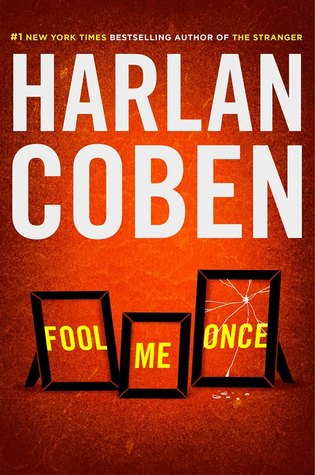
Harlan Coben’s “Fool Me Once”: Secrets are Hard to Keep

foolIn the latest novel by thriller writer Harlan Coben, Maya Burkett struggles with the murders of her husband, Joe, and her sister, Claire. She’s still suffering from PTSD related to her combat experience in the Middle East, and the violence she experiences at home pushes her closer and closer to the edge. But when she discovers that her husband might actually be alive, it sends her screaming on a trail of clues that unearth decades of secrets. When she reaches the end of her search, will she like what she discovers?

Just like his previous novels, Fool Me Once shows Coben’s strengths at balancing the murder and intrigue with the familial and the normal. The Burkett family circle is broken: Joe’s mother is a meddler, concerned with wealth and appearances, Maya’s brother-in-law is an alcoholic and multiple-time loser, and Maya’s friends from the Army have their own struggles and concerns. All of these relate to family dynamics, covering up wounds and secrets that Maya’s investigation uncovers. The results are… devastating.

While the overall thrust of the novel is getting to the truth about the death of Maya’s loved ones, the way that the dynamics of Maya’s PTSD and her family circle are potentially the most interesting. Coben is funny, clever, and wise when it comes to his writing territory, proving again that his years of watching people have not been wasted. He’ll fool you for sure.

Posted in Books, Pop Culture, Reviews | Leave a comment

Sunday’s Sermon Today: Nehemiah – Vision (Character Counts)

In the pantheon of the comics, Batman, Superman, and Spiderman reign supreme, with the influx of superhero movies adding others like the X-men, Iron Man, and more to the casual fans’ awareness. But one of my top five characters has always been Daredevil.

Daredevil is the red suited hero who fights criminals with his two batons, and various forms of martial arts. He’s super aware of his surroundings but fully human without any truly “super” power. A lawyer by day, he tracks down criminals who escape justice at night.

Daredevil is blind.

In an act of heroism as a young boy, he jumped into the street to rescue an old man hobbling in the way of an oncoming truck. He was hit by the truck and its toxic cargo blinded him.

But Daredevil can see what others can’t. Daredevil’s sight may be damaged but his vision is not.


The Prophet Joel says (in Joel 2:28-32): “I will pour out my Spirit on all people. Your sons and daughters will prophesy, your old men will dream dreams, your young men will see visions. Even on my servants, both men and women, I will pour out my Spirit in those days. I will show wonders in the heavens  and on the earth, blood and fire and billows of smoke…. Everyone who calls on the name of the Lord will be saved.”

Vision. Seems pretty crucial here. But it’s more than a dream of something, the spark of a memory of calling. Vision is a character trait of those who follow God. Vision is that thing that drives us, that gives us motivation and direction and guidance. Vision is that thing that we measure our decisions and opportunities against.

To illustrate the importance and purpose of vision, no example seems greater than that of the Prophet Nehemiah.

Nehemiah is the cupbearer to the king. On one hand, he is disposable – his job is to drink every drink the king does first – if it’s poisoned, Nehemiah will die first. On the other hand, he is wildly important – his job is to drink every drink the king does first – if it’s poisoned, Nehemiah will die first. A real Catch-22, right?

So, here is this Jewish slave in the city of his enemy, important enough to be close to the king, yet not important enough to be out of harm’s way. And Nehemiah’s brother, Hanani, arrives with news that Jerusalem is in ruins…

Hanani says, “Those who survived the exile and are back in the province are in great trouble and disgrace. The wall of Jerusalem is broken down, and its gates have been burned with fire.”

Even though Nehemiah is in great danger as the cupbearer, he sits down and weeps at the news of his homeland because he says the situation of those still in Jerusalem to be worse than his own!

While Nehemiah is an example of Vision, he could just as well be an example of Empathy. He sees the hurt of others before his own needs.

So, Nehemiah mourned, fasted and prayed to God for guidance:

Lord, the God of heaven, the great and awesome God, who keeps his covenant of love with those who love him and keep his commandments, let your ear be attentive and your eyes open to hear the prayer your servant is praying before you day and night for your servants, the people of Israel. I confess the sins we Israelites, including myself and my father’s family, have committed against you. We have acted very wickedly toward you. We have not obeyed the commands, decrees and laws you gave your servant Moses. Remember the instruction you gave your servant Moses, saying, ‘If you are unfaithful, I will scatter you among the nations, but if you return to me and obey my commands, then even if your exiled people are at the farthest horizon, I will gather them from there and bring them to the place I have chosen as a dwelling for my Name’. They are your servants and your people, whom you redeemed by your great strength and your mighty hand. 11 Lord, let your ear be attentive to the prayer of this your servant and to the prayer of your servants who delight in revering your name. Give your servant success today by granting him favor in the presence of this man (Nehemiah 1:5-11).

Spoiler alert: in Nehemiah 2, Nehemiah asks the king for permission to go to Jerusalem and rebuild it. The King grants a slave – a captured enemy – permission to go and rebuild the wall because God grants Nehemiah the vision he needs to accomplish what needs done.

Consider that prayer again: Nehemiah praises God for who God is – and the work that God has already done in the lives of the Israelites.

He follows that by appealing to God to hear the prayer Nehemiah is praying on behalf of the people.

Nehemiah confesses the sins he has committed and those that his people have committed.

And he reminds God of the way that God has promised to redeem the people and bring them back if they would repent.

Finally, Nehemiah asks God to give him success.

Nehemiah had a vision for what God could do because he was familiar with who God was and the history of who God had been in the past. Nehemiah’s vision toward the problem facing Jerusalem included his vision for the possibilities of the solution.

Which makes me wonder, when I see problems, do I see solutions, too?

Do I see what could be — and how God has shown up in the past?

Do I pray, expecting God to work again?

Do I have vision?

While we visit the ophthalmologist or optometrist to have our sight tested, tracking the way our eyes move, focus, and adjust to light, chemicals, and the size of various characters, our vision is harder to gauge, evaluate, and even establish.

When I visit the ophthalmologist, I have two sets of tests: with my contacts and without. My sight is pretty awesome with my contacts, but without them… I’m as blind as a bat. And that’s before they put in those nasty drops that dilate my eyes.

Dilation is the transformation that is understood to be the transformation of something from an image that is the same shape as the original, but of a different size.

It’s what we need – we need to see things from a different perspective. For the things themselves to be the right size, in the right order, and the right priority.

I don’t know about you, but I need help to see things – like a rear view mirror warning – that puts all of the images in the right perspective.

I need my contacts to recognize my wife my five feet away. I need my contacts to read a book or drive my car. I can’t really see without them.

Our vision works that way, too. We can’t see the world the way it is without the illumination of God’s word, and the divine inspiration we receive from the Holy Spirit, and the Biblical tradition that we embrace, and the good counsel we receive from those who love us and love Jesus, too.

Our vision can be 20/20 with help – but we can’t do it on our own.

We will see the problems in the world – whether it’s political, social, financial, or otherwise – but we can’t see what we should do to change them without vision.

We will see the things weighing us down and the pain all around us – but we can’t see how to make a difference without vision.

We will struggle with our own misconceptions about the world – but we won’t be able to overcome them without vision.

Friends, I want to see the world in technicolor – in high definition – in the beauty of the kingdom of God. But I know that I can’t do it on my own. I need God. I need my friends. I need you.

Your vision is only as good as your contacts and your context.

We need to daily ask ourselves, in prayer and Scripture, how’s my vision?

May God above provide the dilation.

Posted in Pop Culture, Sermons, Theology | Leave a comment

 Cities of Refuge #12 (the Bible says what?)

One of the strangest passages I’ve ever read in the Bible is in Deuteronomy 4:41-43. There, Moses establishes three cities that will allow anyone who had unintentionally killed a neighbor to find safety.

These were their ‘cities of refuge.’ Different? Yes. But the timing makes them flat-out grace-filled.

Moments before Moses will remind the people of God’s commands, primarily the Ten Commandments, Moses lays out the exception to all of the rules about death and violence that will be covered in the following verses. Here, we see that God has a plan for what grace would look like.

Even though human life was sacred, God had a built in “grace clause” for the people’s accidents. Even in the greatest of mistakes, even an unexcusable one, God had grace for the Israelites. 

Typing this tonight, I’m reminded by these cities of refuge that God extended his “grace clause” when he sent Jesus to die on the cross and rise again. This Lent, I’m thankful for that. I don’t have to flee to a place, or a city, because God  extended that refuge to us once and for all.

May we all take refuge in the cross.

Posted in Uncategorized | Leave a comment

Sunday’s Sermon Today: Solomon – Wisdom (Character Counts)

I love basketball – and I love coaching. But sometimes, there are peripheral parts of the job that get in the way of my enjoyment of the game. Yes, I’m talking about referees!

One Saturday afternoon, I found myself on the sideline, watching as a referee blew his whistle and informed one of my eight-year-old players that he had committed a “five-second violation.” I could tell from my player’s shocked reaction that he was completely oblivious to what had just happened and couldn’t figure out what he had done wrong. The referee didn’t explain but turned to walk up the court.

Of course, I called out to him, “Hey, if you’re going to call that, you need to explain it to him.”

With a second blast of his whistle, the referee came hustling over to me, and according to eyewitnesses, stood two inches from my face. I’m unclear exactly how close he was to me, but I can tell you that he had eaten tuna and peanut butter for lunch. “If you speak again, I’m giving you a technical foul!” he growled, glowering at me.

Now, for those of you who know me in real life, how do you think I responded?

(I’ll wait… )

The truth is that several thoughts went through my head.

One, my wife was watching.

Two, my sons were watching.

Three, okay, the whole gym was watching.

And I … said nothing.

Many of you who have known me for quite some time are probably shocked (or you think I’m lying). But the truth is, I chose silence over speaking because it didn’t seem to be a positive if I spoke – but I could lead my team by staying silent.

Seriously – it’s the advice Joe Fox gives Kathleen Kelly in You’ve Got Mail: ” I must warn you that when you finally have the pleasure of saying the thing you mean to say at the moment you mean to say it, remorse inevitably follows.”

In one of the few moments I can identify in my life, I chose wisdom.

The Bible says that “The fear of the Lord is the beginning of knowledge,
but fools despise wisdom and instruction” (Proverbs 1:7). I’m not sure that’s exactly what kicked in that day on the basketball court – it might’ve been fear of my wife! – but there was a realization that my example in words and actions would be evaluated.

When it comes down to it, I want to be wise. I want to be mature (in progress, people, go easy!) But I never feel like I’m as wise or as mature as I want to be.

Take a minute, and write down the three people who come to mind when you think of being wise…

What are their qualifications for being wise? Are they “smart” by the world’s standards? Are they highly educated? Are they super old? Do you value them as wise because of their faith or is it something else?

To see where we might go for wisdom, I asked on Facebook what the best piece of advice my Facebook friends had been given. The answers were … diverse.

The Golden Rule…..Matthew 7:12. “So in everything, do to others what you would have them do to you, for this sums up the Law and the Prophets.”

If you want to walk on water, you have to get out of the boat.

Just because everyone else is doing it doesn’t mean you should. 

It wasn’t force that wore away the rock; it was the steady drip.

Sometimes you need to lift up the rug and see what’s in the dirt you’ve swept underneath.

There’s always three sides to a story and hear what’s not being said in what’s being said. They go together.

You can’t quit. You aren’t allowed to quit. You can say enough is enough. But you.cannot.quit!

Upon telling my father that I had a “stupid” teacher (while in grade school), he told me that there was something to learn from everyone, even if what I learned was NOT to be like that person.

People will never remember what you said or perhaps even what you did, but they will always remember how you made them feel.

When I got drafted and just before I left for basic training, my father told me that was up to me whether I made a place a heaven or a hell. Meaning, no matter where the military sent me, I could had a choice as to how I responded.

A man is not measured by how many times he gets knocked down but by how many times he gets back up.

Whether you can or you think you can’t…. You’re right. (Henry Ford)

My favorite advice from one of our pastors that I’ve been able to use as a writer is that he wants to be finished talking before we are finished listening.

Don’t take everything so personally – it’s not all about you. 

It’s never too late to be what you might have been.

Worry is the antithesis of prayer. 

I’m not sure if my friends are putting all of this wise advice to work – but they’ve certainly received some good ones!

As we explore Character Counts, we’re going to tackle what wisdom really looks like.

In our Scripture from I Kings 3 today, Solomon has a good life – hey, it’s good to be king! – but when given a chance to choose one gift to receive from God, he asks for wisdom. As literally as we can translate, he asks that God would give him “a discerning heart to govern your people and to distinguish between right and wrong.” Solomon wants to make a good decision.

But like any other character, we can’t see how well we’ve achieved it or figured it out until we get to put it to use…

Two mothers walk into King Solomon’s court claiming that a child is theirs. One woman says it’s her child biologically and that the other woman’s son died and she stole the baby. Both women sound sincere so Solomon calls for a sword to split the baby in two – they can both have half! When the real mother cried out, “No, don’t kill him – she can have him!” Solomon knew that the baby was truly hers.

Can you imagine? Can you see the way that the woman must have appeared, in anguish, and yet Solomon saw right to the truth?

Wisdom.

Inspired by God, born of experience and application, right?

Too often, we think wisdom is for old people – or “experienced” people if we’re going to be polite. But the truth is that just because you’ve lived a long time, or just because you’ve experienced a lot, it doesn’t actually make you wise. Wisdom is when you take what you know and what you’ve seen and apply it in the right way.

John Wesley, the founder of the Methodist church, said that we should examine all of our life situations through something he called the quadrilateral. It was Scripture, Reason, Experience, and Tradition. He heavily weighted the four on scripture – the written, inspired, and vetted word of God that has been handed down to us in the Old and New Testaments. Then he added our ability to think and process things, our ability to consider past situations we had been in, and the opportunity to reflect on the way that Christians had handled the situation in the past. It’s not exactly a math equation, but it ends up being “wisdom.”

Now, I don’t know about you, but I find myself in situations frequently where I wish I was wiser. It’s true when I’m making my own decisions:

Should I have an extra piece of pizza?

Is that movie really one I want to watch and will it be good for my soul?

How do I respond when I am being treated unfairly?

What should be the fair and just response in disciplining one of my children?

But there’s also a desire to be wise when it comes to helping others..

Like the time one of my student’s asked me if it was okay to spend their financial aid on a sweatshirt because they’d forgotten one at home.

Or the time a friend approached me about a situation with their spouse.

Or when one of my sons recounts a story from school where they had to deal with a troublesome classmate.

At those moments, I find myself crying out for wisdom. And I realize that Solomon asked for wisdom before he needed it – so that his life and situations were bathed in wisdom from the very beginning.

I hope today that you’ll pray for wisdom – for you and for me. I had more people want to talk to me about that basketball game than any other game I’ve ever coached. And I knew I could hold my head up because I’d been silent – and that people were watching to see how I’d react.

That’s one of the lessons I’ve learned in life: people are always watching, and you lead them one way or another. I learned that from watching my parents – who are still the greatest sources of living, breathing wisdom I’ve ever had.

In fact, after finishing the rough draft of the sermon, I spent an hour in the car and was flooded with the life lessons people – often my parents – imparted to me.

Always eat breakfast, it’s the most important meal of the day. (My Mom)

It doesn’t matter whether the person takes out the trash on the weekends or runs the whole [school/company/church], they are each a child of God.

Never miss the opportunity to tell someone that you love them. 

The main thing is to keep the main thing the main thing. 

Do your best. [Years later, Friday Night Lights would deliver this in a perfect halftime speech.] (My dad.)

God will receive into heaven each believer, regardless of the denomination, gender, or eloquence of the person who shares the good news. 

You can’t control what the person in the other lane is doing. 

Never give up.

We play for an Audience of One (FCA’s theme a few years ago).

Your integrity is something no one can ever take from you. 

God does not abandon what God has created.

Now, not all of those lessons were actually spoken – but they all provide wisdom that guides my life.

See, wisdom is learned from reading, from watching, from doing. If we want to be wise, we have to act it out – we have to live.

I’m still not as wise as I want to be. But I realize that if I’m ever going to be one of the three names someone writes down under “wise,” that each choice I make matters, each word spoken or left unspoken counts, just like character.

What would it take for you to be on someone’s “wisdom” list? Pray to God and get to work living it out- it’s where to start.

Posted in Sermons, Theology | 2 Comments